€ EUR
€ EUR

Do you see the Cow Face in the shape of this pose? In Light on Yoga, B.K.S. Iyengar writes that a Gomukha is also a musical instrument that is wide on one end and narrow on the other, which is exactly what this pose looks like, tapering from a broad base of hips and feet to the point of the upraised elbow.
Gomukhasana gets into some very hard-to-stretch areas of your body, including the outer thighs, shoulders, chest, and back. Props, including a strap and something to sit on, can be very helpful in getting the most benefit from this posture.
Cow Face Pose Step-By-Step Instructions
- Begin on your hands and knees.
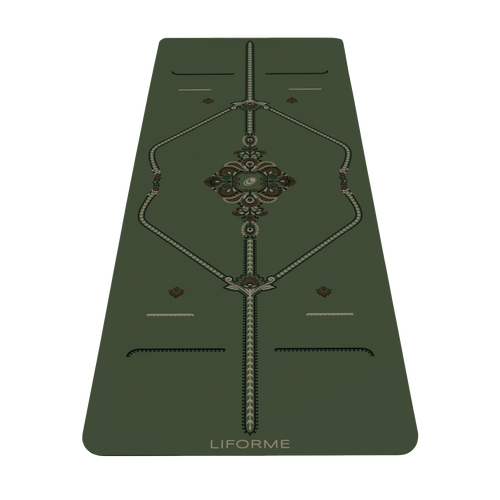
- Move your right knee to your midline (Central Line on your Liforme mat).
- Cross your left knee behind your right knee.
- Separate your right foot toward the left and your left foot toward the right.
- Walk your hands back to settle your sit bones in the space between your feet. Take a folded blanket or a block under your seat to lift it if it doesn’t come to the floor.
- Activate both feet to engage your legs.
- Your right knee is on top, so that means your right arm lifts toward the ceiling. If you are using a strap, take it in your right hand now.
- Bend your right elbow and release your forearm behind your head. Your elbow remains pointed at the ceiling.
- Bend your left elbow and take your left hand up the centre of your back. Your left elbow points at the floor.
- If your hands meet behind your back, clasp them together. If you have a strap in your right hand, take hold of it with your left hand too.
- Keep your head up and your gaze toward the horizon.
- After several breaths, release your clasp and return to your hands and knees to repeat the pose on the other side.
Gomukhasana Basics
Sanskrit Meaning: Go (Cow) Mukha (Face) Asana (Pose)
Yoga Level: Intermediate
Pose Type: Seated
Pose Category: Hip and shoulder opener
Common Props: Yoga strap, blanket, block
Benefits of Cow Face Pose
- Lengthens the outer thighs and glutes.
- Stretches the latissimus dorsi muscles of your back.
- Stretches the deltoid muscles of your shoulders.
- Stretches the pectoral muscles of your chest.
- Stretches the triceps muscles on the backs of your arms.
Gomukhasana Beginner Tips
1. Use a Yoga Strap
Many people find the prospect of their hands meeting behind their backs daunting. Instead of skipping that part of the pose, use a strap, towel, or belt between your hands to create the connection. This gives your body a path to follow and begins to open the tight areas of the chest, shoulders, and back.
2. Stack Your Knees
If it’s difficult to align both knees at your midline, try using a blanket or block under your hips to lift your seat.
3. Keep Your Head Up
The pressure from your arms can push your head forward. Try pressing your head back into your arms to keep your neck aligned with your spine.
4. Each Side is Different
It may be easier to join your hands and/or stack your knees on one side than the other. That’s totally fine. Try to notice the difference without judgment.
Cow Face Preparatory Poses
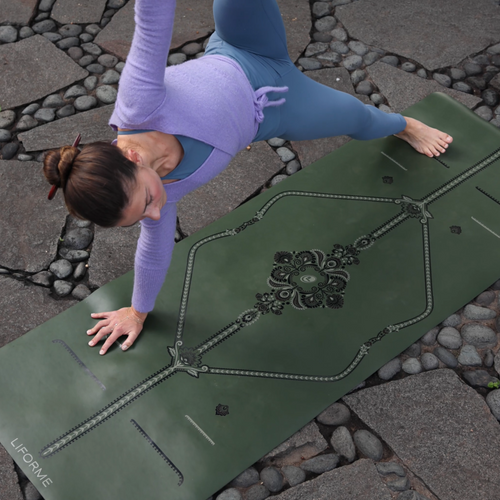
 Featured Yoga Mat: Liforme Classic Yoga Mat in Purple
Puppy Pose opens up your chest and shoulders in preparation for Cow Face.
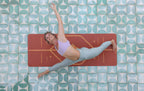
 Featured Yoga Mat: Tantalising Terracotta
Down Dog Split lengthens the hamstrings and opens one hip at a time, which prepares your legs for the deep knee stacking in Cow Face.
Gomukhasana Counter Pose
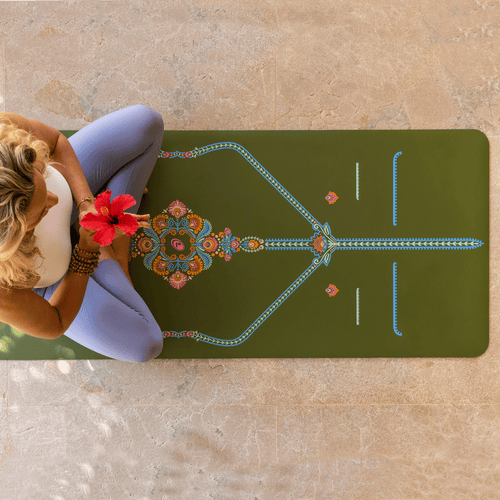
 Featured Yoga Mat: Liforme Classic Yoga Mat in Terracotta
Cat-Cow Stretches help release any tension from the back. You can do them before, after, and in between Cow Face Pose.
Why We Practice Cow Face Pose
Yoga is all about accessing parts of your body that are tight and underutilized. Gomukhasana exemplifies this with its unique form and alignment. If you are new to yoga, this is probably not a position you’ve done before. That makes it challenging and worthwhile, even if it feels awkward at first. Grab your props and find the variation that works for you.
Cow Face Pose FAQs
What are the benefits of Cow Face Pose?
Gomukhasana works on two areas at once, lengthening the outer thighs and glutes through the stacked knees, and stretching the shoulders, chest, back, and triceps through the arm bind. Few poses reach that many tight spots in a single shape.
What are the most common mistakes in Cow Face Pose?
The main one is straining to close the gap between your hands, which pulls the top shoulder forward and loses the stretch you were reaching for. Collapsing onto one hip when your seat doesn't reach the floor is another, as is going straight into the bind without opening the shoulders first. Use a strap between your hands and a blanket under your hip to address these issues.
Why can't I get my hands to touch?
This usually comes down to tight shoulders, chest, or lats rather than anything you're doing wrong. Use a strap, towel, or belt between your hands so you still get the stretch, and let the gap close gradually over time.
Why does one side feel harder than the other in Cow Face Pose?
Most people have some asymmetry in the shoulders and hips, so one side of Cow Face will nearly always feel more available than the other. Work with what each side offers rather than forcing the tighter one to match.
Is Gomukhasana good for beginners?
It's classed as intermediate, but it's very adaptable. Sitting on a blanket or block and using a strap for the arms makes it accessible early on, even if the full expression takes a while.
Do I need props for Cow Face Pose?
Most people do, at least at first. A strap bridges the hands, and a blanket or block under your seat lifts your hips so the knees can stack more comfortably.
Should I do Cow Face Pose if I have knee pain?
Approach with caution. The deep knee flexion and crossing can aggravate existing knee issues, so ease off if you feel any pinching or sharp sensation, and check with a healthcare professional if you have a diagnosed knee condition.