$ USD

Self-love is a bit of a buzzword in the wellness community, which means we hear a lot of talk about the importance of accepting and loving ourselves, but not a lot of useful advice on how to get there.
It’s very difficult to wake up one morning and decide you’re finally going to start loving yourself. But you can wake up today and decide to do yoga.
8 Yoga Poses to Practice Self-Love
Yoga Poses to Connect to Your Body
Fully inhabiting your body through grounding practices like movement and breath helps you feel more comfortable in your skin. Your self-appreciation expands as you discover what you are capable of and how to be in the present moment. As you learn to feel more connected to all the different parts of your being, your love for yourself naturally grows.
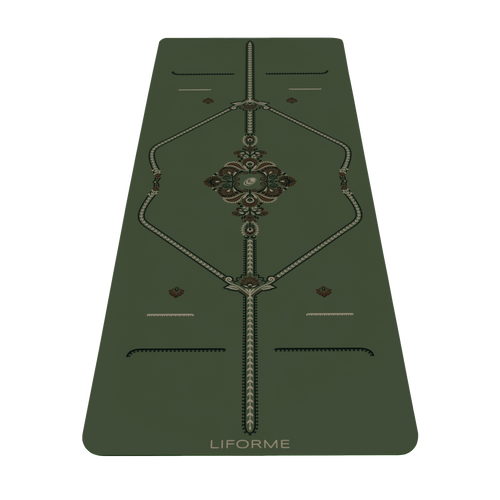
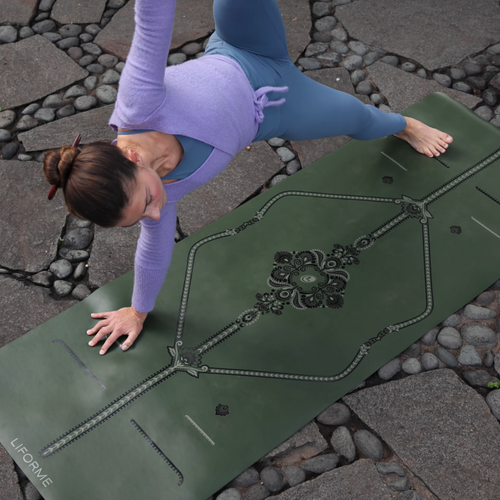
 Featured Yoga Mat: Mindful Garden in Olive
Mountain Pose (Tadasana)
Sanskrit Meaning: Tada (Mountain) Asana (Pose)
Yoga Level: Beginner
Pose Type: Standing
Benefits: Promotes good posture. Strengthens the legs and core. Improves your body awareness.
Why This Pose: Mountain Pose provides the opportunity for a full-body check-in as you ground through the soles of your feet.
Step-by-Step Instructions:
- Stand at the front of your mat with your feet parallel.
- Feel all four corners of your feet root into the floor.
- Engage your quads to lift your kneecaps.
- Draw your navel gently toward your spine.
- Stack your shoulders over your pelvis.
- Open your palms toward the front of the room.
- Keep your chin parallel to the floor.
- Close your eyes as you focus inward on the sensations engaging your whole body.

Corpse Pose (Savasana)
Sanskrit Meaning: Sava (Corpse) Asana (Pose)
Yoga Level: Beginner
Pose Type: Supine
Benefits: Rests the body
Why This Pose: Connect with yourself as you acknowledge and relax each part of your body.
Step-by-Step Instructions:
- Lie on your back. We often end class with Savasana, but you can also begin here.
- Bring your attention to your toes and then relax them. You can also try engaging them and then relaxing them.
- Bring your attention to your feet, then your calves, knees, and thighs.
- Move on to your buttocks, abdomen, shoulders, arms, hands, and fingers.
- Finish with your face.
- Spend several breaths fully relaxed after having recognized every part of your body.
Yoga Poses to Accept and Love Your Body
One of yoga’s most powerful lessons is to accept your body where it is on any given day. When you first start yoga asana practice, that doesn’t always come easily. You may struggle to arrange your body to resemble the poses you see demonstrated at the front of the room. You can’t force or sweet-talk your hamstrings into a deeper forward bend, so you have to accept yourself as you are.
With consistent practice, you may soon start to see improvement, and that makes you feel good about yourself. You’ve done something difficult, and your body and mind have experienced change. If you’ve struggled with your body image, your negative feelings about how your body looks may even be replaced with positive ones about what it can do.
In yoga, there is no end goal, no place where you can stop and rest on your laurels, at least not for very long. There will always be another challenge and other opportunities to repeat the cycle of trying, failing, doubting yourself, and overcoming.
Eventually, you may come to see that the failing and the doubting are not the most important part of the process. Actually, neither is the overcoming. Trying and trying and trying some more is the practice. It’s much more difficult to see yourself as a failure when it's revealed how irrelevant success is.
 Featured Yoga Mat: Mindful Garden in Grey
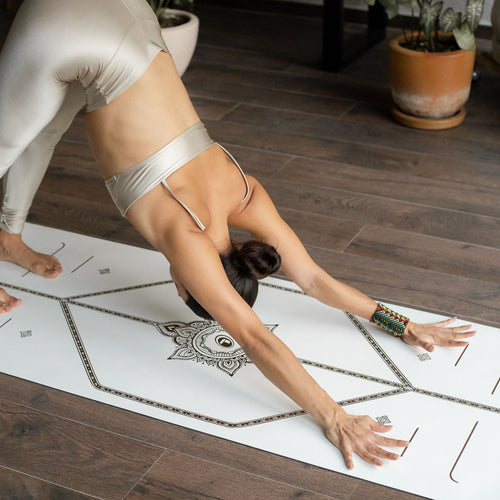
Standing Forward Fold (Uttanasana)
Sanskrit Meaning: Uttana (Intense Stretch) Asana (Pose)
Yoga Level: Beginner
Pose Type: Standing
Benefits: Stretches your hamstrings and back, strengthens your legs.
Why This Pose: Uttanasana is an opportunity to practice acceptance. It feels good to forward bend; how deep you go doesn’t matter.
Step-by-Step Instructions:
- From Mountain Pose, rotate your pelvis forward to come into a forward fold on an exhalation of breath.
- Keep your pelvis stacked over your ankles.
- Let your arms and your head hang heavy.
 Featured Yoga Mat: Radiant Sun in Yellow
Wind Relieving Pose (Pavanamuktasana)
Sanskrit Meaning: Pavana (Wind) Mukta (Liberating) Asana (Pose)
Yoga Level: Beginner
Pose Type: Supine
Benefits: Compression of the abdominal organs.
Why This Pose: Give yourself a hug to affirm your self-love.
Step-by-Step Instructions:
- Lie down on your back with your knees bent.
- Lift your feet off the floor and hug your knees into your chest, wrapping your arms around your shins.
Yoga Poses to Free Your Mind
Yoga and meditation teach us how to be in the present moment. Think about the negative self-talk that happens in your head. You’re beating yourself up over something that happened in the past or stressing over something that’s coming up in the future. But what about right now? What are you doing right now?
When you’re meditating, you’re sitting and breathing. When you’re deep in a yoga pose, your body takes a different shape, but you’re still just breathing. Inhaling. Exhaling. Inhaling. Exhaling.
The breath provides a refuge where you can hold the past and the future at bay and stay in the present, even if it’s for just a few moments. And this handy tool is always with you, available at any time.
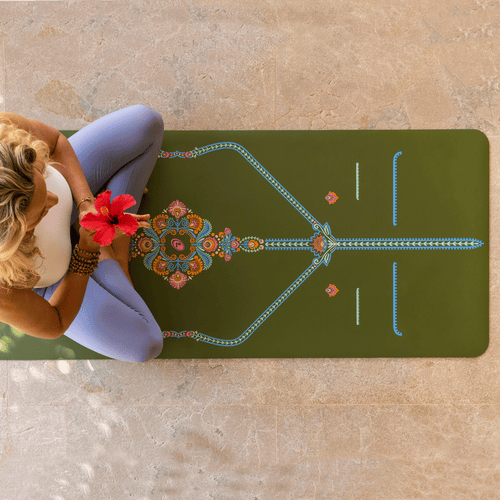
 Featured Yoga Mat: Liforme Classic Yoga Mat in Olive
Chair Pose (Utkatasana)
Sanskrit Meaning: Utkata (Powerful) Asana (Pose)
Yoga Level: Beginner
Pose Type: Standing
Benefits: Strengthens your legs and core
Why This Pose: When your thighs start burning, focus on your breath.
Step-by-Step Instructions:
- From Mountain Pose, bend your knees while sending your hips toward the back of your mat as if you were going to sit in a chair.
- It doesn’t matter how deep you sit as long as you feel it in your thighs.
- Take your arms overhead.
- Breathe through your discomfort for 10 breaths.

Easy Pose (Sukhasana)
Sanskrit Meaning: Sukha (Comfort) Asana (Pose)
Yoga Level: Beginner
Pose Type: Seated
Benefits: Opens the hips, improves posture.
Why This Pose: After your asana session, practice sitting for meditation for five to ten minutes.
Step-by-Step Instructions:
- Sit in a comfortable, cross-legged position.
- If your knees are higher than your hips in this position (they are for most people), take folded blankets or blocks under your seat until your knees are below your hips. This makes it much easier to keep your spine long.
- Bring your hands to your thighs with your palms facing up or down.
- Close your eyes.
- Focus on your inhalations and exhalations of breath: how it feels to fill and empty your lungs, what the air feels like going in and out of your nose.
- When your mind wanders, and you start to engage with your thoughts, catch yourself and refocus on your breath.
Yoga Poses that Introduce Body to Mind
Releasing tightness and making space in the body are big parts of the physical practice of yoga. But it’s also about making space in your mind. The extreme physicality of asana practice (which doesn’t mean circus-style acrobatics; it means the sharp focus and minute attention to detail that aligning your body into any yoga pose requires) has the effect of temporarily emptying your mind.
When you come back, you might find that things have been rearranged. Your negativity and self-doubt may have moved over to make room for your positivity and self-love. It doesn't happen overnight, but with consistent practice, it does happen.

Tree Pose (Vrksasana)
Sanskrit Meaning: Vrksa (Tree) Asana (Pose)
Yoga Level: Beginner
Pose Type: Standing
Benefits: Improves balance, core strength, and leg strength.
Why This Pose: Balancing poses that require a lot of attention to alignment help clear your mind.
Step-by-Step Instructions:
- From Mountain Pose, begin to take your weight into your right leg without changing the neutral position of your hips.
- Lift your left foot away from the floor.
- Position the sole of your left foot on your inner right thigh, using your hands if necessary. It’s also okay to take the left foot lower on your right leg if it doesn’t comfortably come to the thigh.
- Press your foot into your thigh and your thigh back into your foot.
- Take your arms overhead.
- Keep your attention focused on maintaining your alignment and your balance.
- After several breaths, repeat standing on the other leg.
 Featured Yoga Mat: Cosmic Moon in Dusk Blue
Warrior II (Virabhadrasana II)
Sanskrit Meaning: Virabhadra (A Hindu Warrior) Asana (Pose)
Yoga Level: Beginner
Pose Type: Standing
Benefits: Strengthens the legs, back, arms, and core. Opens the hips, hamstrings, and chest.
Why This Pose: Attention to detail improves your body awareness, integrating body and mind.
Step-by-Step Instructions:
- From Mountain Pose, step your left foot to the back of your mat.
- Turn your left toes out 90 degrees and align the heel of your right foot with the arch of your left foot.
- Bend your right leg to bring your knee over your ankle and your right thigh parallel to the floor.
- Align your hips and shoulders with the long side of your mat, stacking your shoulders over your hips.
- Take your arms parallel to the floor and your gaze over your front fingertips.
- Repeat the pose with the left leg forward.
Tips for a Self-Love Yoga Practice
Set an Intention Before You Begin
Choose an affirmation to carry through your practice, such as "I trust my body" or "I am grateful for my progress." It gives your mind somewhere kind to land when it starts to wander.
Use Props Freely
A block, a folded blanket or a yoga strap is a small act of care for your body. Props meet you where you are, so every pose can feel supportive.
Notice How You Speak to Yourself
If your inner voice gets critical when you wobble or can’t find a shape easily, try offering yourself the encouragement you would give a friend.
Let Go of Comparison
The yogi on the next mat has their own body and their own history. Let your own sensations guide how far you go in each pose.
Keep Showing Up for Yourself
Self-love grows gradually, so a consistent practice is the biggest favor you can do for yourself. The poses above help you connect with your body and accept it as it is on any given day. Over time, the kindness you show yourself on the mat starts to shape how you treat yourself off it. Today is a good day to begin.
Self-Love Yoga FAQs
What is self-love yoga?
Self-love yoga uses movement and breath to help you build a kinder relationship with yourself and your body.
Can yoga help with self-love?
Yes. Regular practice encourages you to accept your body as it is and appreciate what it can do.
How often should I practice yoga for self-love?
Consistency matters more than length. Even a few minutes each day helps build the habit of showing up for yourself.
Can beginners practice self-love yoga?
Yes. Gentle poses like Mountain Pose and Easy Pose are great starting points, and props can make them more comfortable.
Is it normal to feel emotional during yoga?
Yes. Slowing down can bring feelings to the surface, so rest whenever you need to and reach out for support if difficult feelings persist.