$ USD
$ USD

Yoga is an amazing tool for many people with anxiety. Where your body goes, your mind follows, so during particularly anxious times, it can help to practice poses that calm your nervous system and encourage mindful breathing.
Maintaining a consistent practice over time allows yoga to play an even more powerful role in anxiety management. The more you practice, the better you get to know your body, your mind, and the relationship between them, which opens the doors to many techniques you’ll find useful in coping with anxiety.
8 Ways Yoga Helps with Anxiety

Yoga…
1. Provides Tools for Grounding
Grounding is a word that gets used a lot in yoga. It means having a strong connection with the physical body, which can be used to anchor the mind if it starts to spin out. Movement is grounding. So is breathing. Your breath anchors your body in its physicality, taking your focus away from your thoughts and into your body.
 Featured Yoga Mat: White Magic Yoga Mat
2. Focuses on the Present Moment
Yoga makes a practice of noticing your breath. Sometimes we speed it up or slow it down for particular effects, but sometimes it’s enough just to notice it without changing anything.
Focusing on movement and breath also allows you to exist in the present moment more easily, which is helpful when anxiety is triggered by worries about what might happen in the future.
 Featured Yoga Mat: Liforme XL Yoga Mat in Dusk Blue
3. Improves Body Awareness
Anxiety creates physical symptoms you may not notice unless you are used to tuning in to how it feels to live in your skin. When you’re more aware of your body, you can learn how to counter the physical manifestations of your anxiety by doing things like relaxing tensed muscles and deepening shallow breaths.
 Featured Yoga Mat: Expressions Yoga Mat in Happiness Orange
4. Awakens a New Sense of Self
Even when sitting for a short meditation, you begin to witness your thoughts without engaging with them. When you experience the activity of your mind as an observer, it becomes clear that you are not your thoughts, which makes it easier to separate from non-productive spirals.
 Featured Yoga Mat: Liforme x You
5. Fosters Acceptance
Every time you show up on your mat, you get a lesson in accepting yourself the way you are right now. It doesn’t matter what you did yesterday, what you plan to do tomorrow, what you had for lunch, all that matters is what you are doing right now. This isn’t a lesson that comes easily, but when you get it enough times, it comes.

6. Stops the Chatter
The physicality of asana practice is so intense that it takes all your attention. You often emerge from yoga only to realize that you haven’t had time to think about anything else for an hour. This relief from the constant chatter of the monkey mind is one of the most important benefits of yoga.
7. Promotes Toleration of Discomfort
Every new posture puts you in the position of working with the edges of your own discomfort. Learning to manage this sensation in your body in a low-risk situation is excellent training for the brain.
8. Improves Well-Being
Yoga makes you feel better. Full stop.
What Kind of Yoga Helps with Anxiety?
It doesn’t matter what kind of yoga you do. Fast, slow, group classes, home practice, any temperature, any method. Yoga comes in a lot of flavours, so you may need to try a few before you find the right one, but there is a type of yoga out there for everyone.
Best Yoga Poses for Anxiety
While any consistent yoga practice will help with anxiety over time, certain poses are particularly effective at activating the parasympathetic nervous system, grounding the mind, and releasing physical tension.
Here are some of the best yoga poses for anxiety to weave into your practice.
 Featured Yoga Mat: Rainbow Yoga Mat in Blue Sky
Child’s Pose (Balasana)
Sanskrit Meaning: Bala (Child) Asana (Pose)
Yoga Level: Beginner
Pose Type: Kneeling
Why this Pose: The forward fold and physical contact with the mat are immediately grounding, and the gentle compression of the hips and lower back releases tension where stress tends to accumulate.
Step-by-Step Instructions:
- From a kneeling position, sink your hips back toward your heels.
- Fold your torso forward and extend your arms in front of you, or rest them alongside your body.
- Let your forehead rest on the mat and breathe deeply into your back body.
 Featured Yoga Mat: Liforme Classic Yoga Mat in Blue
Legs Up the Wall Pose (Viparita Karani)
Sanskrit Meaning: Viparita (Inverted) Karani (To Do)
Yoga Level: Beginner
Pose Type: Inversion, Supine
Why this Pose: This gentle inversion encourages the body's relaxation response, slowing the heart rate and calming the nervous system with very little effort.
Step-by-Step Instructions:
- Sit sideways next to a wall and swing your legs up as you lie back.
- Let your arms rest open at your sides, palms facing up.
- Stay for five to fifteen minutes, breathing naturally.
 Featured Yoga Mat: Cosmic Moon Yoga Mat in Black
Standing Forward Fold (Uttanasana)
Sanskrit Meaning: Uttana (Intense Stretch) Asana (Pose)
Yoga Level: Beginner
Pose Type: Standing
Why this Pose: Mild inversions have a calming effect on the nervous system, while releasing tension from the neck and shoulders, where anxiety often shows up physically.
Step-by-Step Instructions:
- Stand with your feet hip-width apart and fold your torso over your legs.
- Let your head hang heavy and your arms dangle, or hold opposite elbows.
- Bend your knees as much as you need to and breathe into the back of your body.
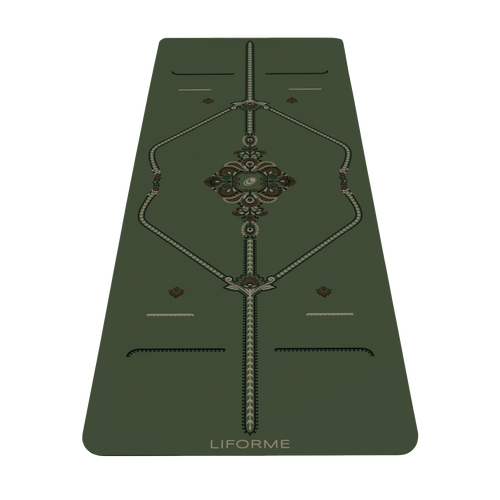
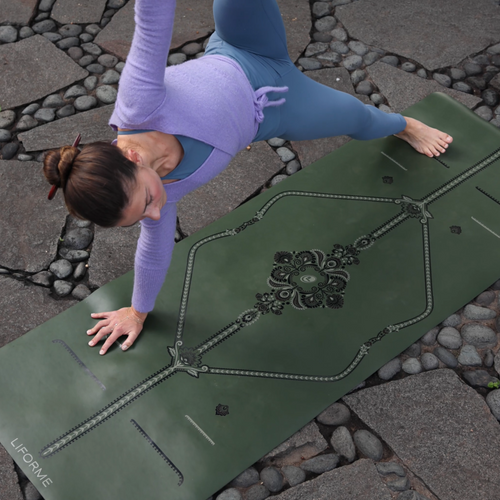
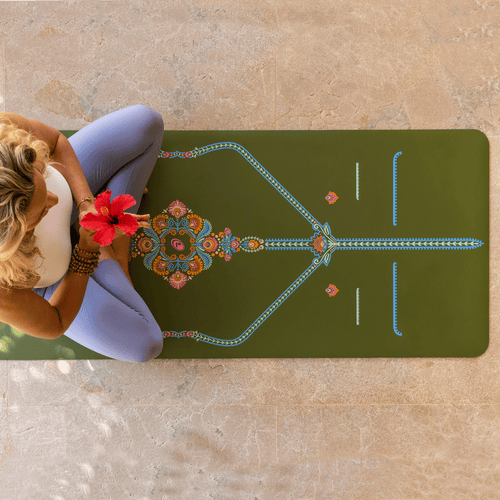
 Featured Yoga Mat: Mindful Garden Mat in Olive
Easy Pose (Sukhasana)
Sanskrit Meaning: Sukha (Comfort) Asana (Pose)
Yoga Level: Beginner
Pose Type: Seated
Why this Pose: A comfortable seat for breathwork and meditation.
Step-by-Step Instructions:
- Sit cross-legged on your mat, or on a folded blanket if your hips are tight.
- Lengthen your spine and rest your hands on your knees.
- Close your eyes and take slow, deep breaths for several minutes.
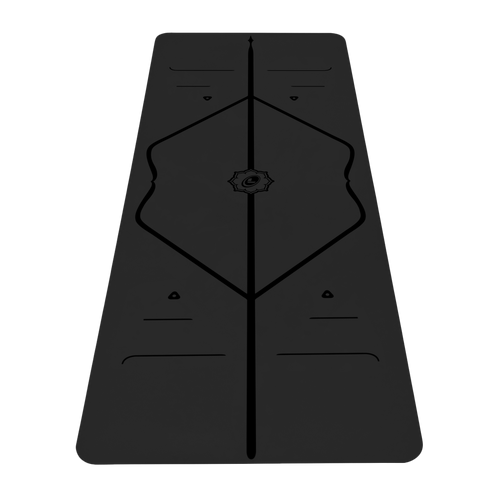
 Featured Yoga Mat: Liforme Classic Yoga Mat in Olive
Happy Baby Pose (Ananda Balasana)
Sanskrit Meaning: Ananda (Happy) Bala (Baby) Asana (Pose)
Yoga Level: Beginner
Pose Type: Supine
Why this Pose: One of the most effective yoga poses for releasing tension in the hips and lower back.
Step-by-Step Instructions:
- Lie on your back and draw your knees toward your chest.
- Take hold of the outer edges of your feet, or your ankles, or shins if that's more accessible.
- Gently draw your knees toward the floor on either side of your torso and breathe deeply.
 Featured Yoga Mat: Blossoming Lotus Mat in Purple
Cat-Cow Stretches (Marjaryasana-Bitilasana)
Sanskrit Meaning: Marjari (Cat) Asana (Pose) and Bitila (Cow) Asana (Pose)
Yoga Level: Beginner
Pose Type: Kneeling
Why this Pose: The rhythmic movement linked to the breath is one of the most effective ways to interrupt anxious thought patterns and bring attention back to the body.
Step-by-Step Instructions:
- Begin on hands and knees in a tabletop position.
- Inhale to drop your belly and lift your gaze (Cow). Exhale to round your spine toward the ceiling (Cat).
- Move slowly and let the breath lead the movement.
 Featured Yoga Mat: Liforme Classic Yoga Mat in Purple
Corpse Pose (Savasana)
Sanskrit Meaning: Sava (Corpse) Asana (Pose)
Yoga Level: Beginner
Pose Type: Supine
Why this Pose: Savasana asks you to do nothing, letting the body be completely still and the mind settle. It's harder than it sounds, which is exactly why it's so valuable for anxiety.
Step-by-Step Instructions:
- Lie flat on your back with your arms slightly away from your body, palms facing up.
- Allow your feet to fall open.
- Close your eyes and breathe naturally.
Beginner Tips for Practicing Yoga for Anxiety
- You don't need to do a full class to feel the benefits. Ten to fifteen minutes of mindful movement or breathing makes a difference.
- Start with restorative poses if you're new to yoga. They're accessible, low-effort, and immediately calming.
- Try to practice at the same time each day to build a habit. Consistency is what makes yoga effective for anxiety in the long run.
- Don't worry about doing the poses perfectly. The breath and the intention matter far more than the shape of the posture.
- If your mind wanders during practice - and it will - simply notice it and bring your attention back to your breath.
If you are brand new to yoga and you don’t know where to begin, check out our complete Beginners’ Guide.

Is Yoga for Anxiety Enough?
Yoga complements many other types of interventions and contributes to a low-stress lifestyle. Therapy and medication are also helpful for many people. If you have anxiety, talk to a health care professional. There are many things you can do to get relief.
What About Pranayama, Chanting and Meditation?
Pranayama breathing exercises can prompt the parasympathetic nervous system to regulate hormonal responses. Research has shown that the vibrations from chanting can stimulate the vagus nerve, which signals the body to relax. Regular meditation is also proven to reduce stress and anxiety. Alongside consistent yoga asana, these practices add to the toolbox you can use to self-regulate.

Start Where You Are
Yoga won't eliminate anxiety overnight, but it gives you a set of tools that get more effective the more you use them. It doesn’t really matter if you start with a few poses from this list, a short breathing exercise, or simply showing up on your mat for ten minutes; the most important thing is to begin. The practice will grow from there.
Yoga for Anxiety FAQs
Does yoga actually help with anxiety?
Yes, but the benefits come from consistent practice over time, not from any single session or pose. Regular yoga builds body awareness, teaches you to work with your breath, and trains the nervous system to respond more calmly to stress.
Which yoga poses are best for anxiety?
Grounding and restorative poses tend to be the most effective. Child's Pose, Legs Up the Wall, Happy Baby, and Savasana all help activate the parasympathetic nervous system and calm the mind.
How often should I practice yoga for anxiety?
Several times a week is ideal. Consistency matters more than duration. Even a short daily practice will have a greater effect than one long session a week.
Does it matter what style of yoga I do?
No. Any yoga practiced regularly will help with anxiety. Try a few different styles and find what feels right for you.
Can yoga replace therapy or medication for anxiety?
Yoga is a powerful complement to other treatments, but it's not a replacement for professional support. If you're experiencing significant anxiety, speak to a healthcare professional alongside starting or continuing your practice.