€ EUR
€ EUR

Let’s settle YIN.
In a world that moves fast, Yin yoga asks us to do the opposite. Instead of building heat and strength, Yin invites us to soften, surrender, and stay. Poses are held for several minutes at a time, allowing gravity, not muscular effort, to do the work. The result is a practice that targets the deeper connective tissues: fascia, ligaments, and joints, while calming the nervous system and creating space for stillness.
Yin Yoga is the practice of melting. Imagine yourself as a beautiful ice sculpture, slowly melting with time. When ice melts into water, its form changes, but its essence remains the same. In this practice of yin, we connect to something internal: the essence of ourselves that is changeless.
This makes Yin a natural counterpoint to more active, “yang” styles like Vinyasa or Power Yoga, which build heat through continuous movement and muscular engagement. Where yang practices energize and strengthen, Yin slows things down, encouraging the nervous system to shift out of “doing” mode and into rest. Many practitioners use the two as complements: a dynamic flow for strength and stamina, and a Yin practice for recovery, flexibility, and stillness.
What Is Yin Yoga?
Yin yoga is a meditative practice built around long, passive holds, typically three to five minutes per pose, sometimes longer. Rather than actively contracting muscles to stay in a shape, you relax into the pose as much as possible, allowing gravity and time to create a gentle, sustained stretch. This works the body’s connective tissues: fascia, ligaments, and joint capsules, rather than the muscles themselves.
It’s a practice suited to almost everyone, but it particularly appeals to people who want to build flexibility and joint mobility, calm an overstimulated nervous system, or balance out a more active fitness or yoga routine. Because there’s little physical exertion involved, Yin can feel deceptively simple. The real work tends to be mental and emotional, in sitting with stillness and, at times, discomfort.
The Three Core Principles of Yin Yoga
Find Your Edge
Move into a pose until you feel a moderate stretch or resistance, not pain, and stop there. This “edge” isn’t a fixed point; it may soften as you hold the pose, at which point you can gently deepen the stretch. The goal is a sustainable, appropriate level of sensation, not the deepest possible stretch.
Be Still
Once you’ve found your edge, resist the urge to fidget, adjust, or move out of the pose. Stillness allows the stretch to reach the target tissue rather than being redirected through small movements. Physical stillness also tends to support mental stillness, which is much of the point of the practice.
Hold for Time
Yin poses are held far longer than in most other styles, often three to five minutes, sometimes up to ten. This extended hold is what allows the stretch to reach connective tissue, which responds to a different kind of loading than a quick, dynamic stretch, rather than just muscle.
What Are The Benefits of Yin Yoga?
Flexibility
Long, passive holds gradually increase the elasticity of connective tissue around the joints, which can improve range of motion over time, particularly in the hips, pelvis, and lower spine, areas that Yin poses tend to target.
Joint Mobility
Because Yin works the ligaments and joint capsules rather than just the muscles, it can help maintain healthy movement in the joints themselves, which is especially valuable as a complement to muscle-focused strength or cardio training.
Nervous System Regulation
The stillness and extended holds encourage the parasympathetic (“rest and digest”) nervous system to switch on, which can lower stress levels, ease anxiety, and support better sleep. Many people find the long holds bring up restlessness or discomfort at first, and learning to breathe through that is part of the nervous system benefit.
Additional Benefits
- Encourages mindfulness and present-moment awareness, since there’s little to distract from the sensations of the pose.
- Can improve circulation to joints and connective tissue that don’t always get attention in more muscular practices
- Offers a low-impact option for rest days, injury recovery, or times when a vigorous practice isn’t appropriate.
- Complements strength training and cardio-based fitness routines by targeting tissues those activities don’t reach.
Key Yin Yoga Poses
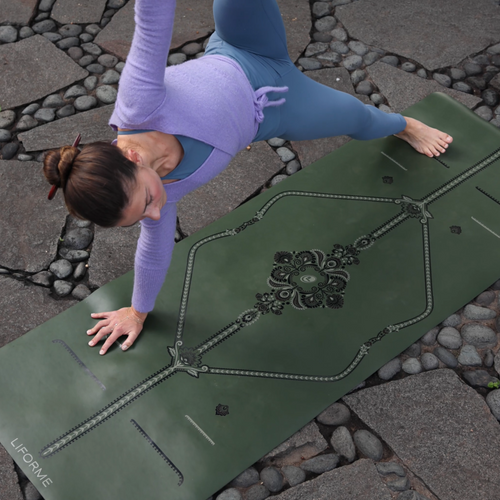
Yin is less about the shapes and more about what happens when you stop moving. The quiet, the breath, the space between effort and ease. A supportive yoga mat and a few simple props are all you need to hold that stillness comfortably. Yin rewards patience, not effort.
Slow down, sink in, and let gravity do the rest.
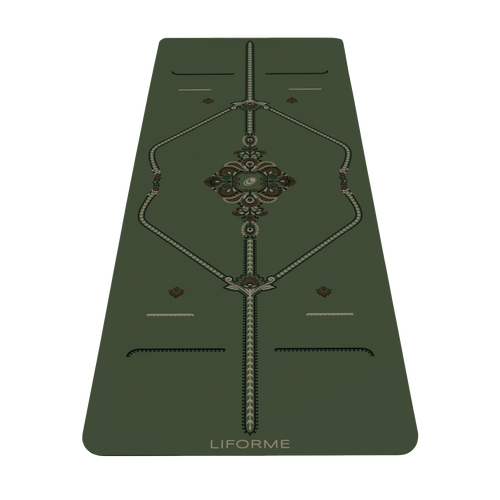
 Featured Yoga Mat: Liforme Classic Yoga Mat in Blue
Waterfall Pose
Pose Type: Supine Inversion
Why This Pose: This gentle inversion encourages fluid drainage from the legs, softens the lower back, and signals to the nervous system that it's safe to slow down.
Step-by-Step Instructions:
1. Scoot your hips close to a wall.
2. Swing your legs up.
3. Let your arms rest open at your sides.
4. Stay for 3–5 minutes, eyes closed, breath long and easy.
Deer Pose Twist
Pose Type: Seated Hip Opener
Why This Pose: Deer pose works the outer hips and IT band while the twist adds a gentle wring through the spine and low back.
Step-by-Step Instructions:
1. From a cross-legged seat, bring your left leg behind you, keeping the knee gently bent.
2. Twist toward your right leg.
3. Let your torso rest over your right thigh rather than forcing depth.
4. Hold 3–5 minutes, then switch sides.
Half Shoelace
Pose Type: Seated
Why This Pose: Targets the glutes and outer hip of the bent leg
Step-by-Step Instructions:
1. From a cross-legged seat, extend your left leg straight forward.
2. Cross your right knee over your left knee, tucking your right foot close to your left hip.
3. Fold forward over your left leg.
4. If your forehead doesn't reach the ground, rest it on a block or let your arms be your pillow.
5. Hold 3–5 minutes per side.
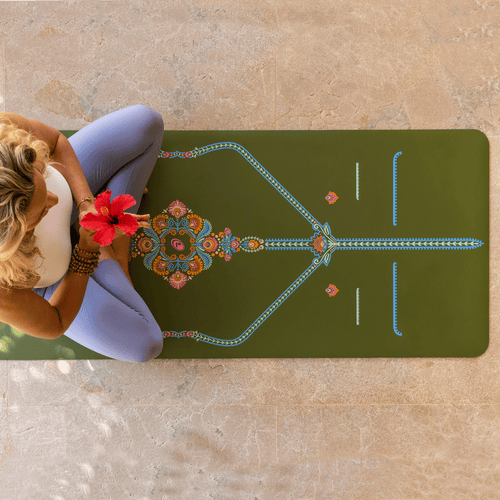
 Featured Yoga Mat: Enchanted Forest Haven
Surfboard
Pose Type: Prone
Why This Pose: Opens the front body and gently compresses the low back
Step-by-Step Instructions:
1. Come onto your belly for this quiet backbend.
2. Prop up on your forearms or lift your chest slightly with hands beneath your shoulders.
3. For more support, place a bolster under your ankles and a block under each shoulder or hand to take pressure off the wrists and let you settle rather than brace.
4. Hold 3–5 minutes.
 Featured Yoga Mat: Liforme Classic Yoga Mat in Grey
Sphinx Pose
Pose Type: Prone
Why This Pose: One of the most accessible backbends in Yin, offering a slow, steady stretch through the abdomen and lower spine
Step-by-Step Instructions:
1. Lie on your belly.
2. Plant your elbows under your shoulders, chest lifted.
3. Keep the glutes soft. This is a passive lift, not an active one.
4. Hold 3–5 minutes.
 Featured Yoga Mat: Radiant Sun in Yellow
Supine Spinal Twist
Pose Type: Supine
Why This Pose: Releases the spine and low back after backbends, restoring balance to the torso.
Step-by-Step Instructions:
1. Roll onto your back
2. Hug your knees in, then let them fall to one side as your gaze drifts the opposite way.
3. Rest your arms in a T or cactus shape.
4. Hold 3–5 minutes per side.

Stonehenge Savasana
Pose Type: Supine
Why This Pose: This gentle inversion turns Savasana into a restorative supported inverted pose, letting the front body release everything the practice has stirred
Step-by-Step Instructions:
1. Close the practice by stacking two blocks at their lowest or middle height and resting a bolster across them, creating an elevated platform for your calves and lower legs.
2. Lie back over it, arms open, legs long. Your neck can be supported by a rolled blanket as an option.
3. Rest here for 5–10 minutes, or as long as you like.
The Origins & History of Yin Yoga
Yin yoga’s connective-tissue focus draws on ideas from traditional Chinese medicine, particularly the concept of meridians, energy pathways that Chinese medicine associates with different organs and systems in the body. Many Yin poses are designed to apply gentle, sustained pressure along these meridian lines, blending a Taoist yin-yang framework with a physical practice.
The style as it’s taught today took shape in the late 20th century, largely through the work of martial artist and yoga teacher Paulie Zink, who combined Taoist yoga with his background in martial arts to develop a slow, long-hold practice in the 1970s. His student Paul Grilley later refined and popularized the approach, moving away from some of the more esoteric Taoist framing and grounding the practice in anatomy, particularly the idea that different bodies have different bony structures and ranges of motion, so poses should be approached individually rather than toward one “correct” shape.
Sarah Powers (Author of Insight Yoga), another student of Grilley’s, further shaped the style widely taught today, blending it with Buddhist philosophy and mindfulness teachings and coining much of the terminology now associated with Yin, including the “three principles” of finding your edge, being still, and holding for time. Through Grilley, Powers, and the teachers who trained under them, Yin spread from a niche practice into one of the most widely taught styles in modern studios.
How Does Yin Yoga Differ from Other Yoga Styles?
Yin sits at the calm, slow end of the yoga spectrum, and understanding where it fits alongside other styles can help you decide how to build it into your weekly schedule.
Unlike Vinyasa, which links poses together through continuous movement and breath, Yin holds a small number of poses for several minutes each, with long stillness between transitions rather than flow.
Unlike Hatha, where the emphasis is on individual postures held actively with muscular engagement, Yin asks you to relax the muscles as much as possible and let connective tissue, rather than strength, do the work.
Unlike yang styles more broadly (a category that includes Vinyasa, Ashtanga, and Power Yoga), which build heat, strength, and stamina through active engagement, Yin is intentionally passive; it targets the tissues that yang practices tend to leave untouched.
Rather than replacing a more active practice, Yin is generally best used alongside one, giving the body and nervous system a different kind of work to balance out the effects of movement-based training.
How to Get Started with Yin Yoga
Yin classes are often quieter and slower than most people expect. There’s little cardiovascular effort, but the long holds can be surprisingly challenging in their own way.
What to expect: A typical class involves only a handful of poses, often five to eight, each held for three to five minutes or longer. Teachers usually offer a short guided settling at the start and a relaxation period at the end.
Props: Yin relies heavily on props to support the body so muscles can fully release. Bolsters, blocks, blankets, and cushions are common. A stable, comfortable yoga mat also helps since you’ll be seated or reclined on it for extended periods.
What to wear: Loose, comfortable clothing that won’t restrict your hips or dig in during long seated holds; leggings or joggers and a relaxed top work well, since you won’t be moving vigorously enough to need close-fitting activewear.
Session length: Yin classes typically run 45–75 minutes, though home practices can be shorter, even 20–30 minutes. Even doing two or three poses is worthwhile.
Sitting with discomfort: It’s normal for sensations to build in the first minute or two of a hold before easing off as the tissue releases. The aim is a steady, moderate stretch, never sharp or joint-level pain. If a pose feels wrong, ease out slightly rather than pushing through. Breathing slowly and directing your attention to the sensation, rather than away from it, is often what makes the difference between a pose feeling unbearable and feeling workable.
Let Yin In
Yin yoga offers something most active practices don’t: permission to be still. By holding poses for minutes rather than seconds, it reaches the connective tissue around your joints, calms an overactive nervous system, and builds a kind of flexibility that a faster-paced class can’t. Whether you’re balancing out a more vigorous training routine or simply looking for a slower way to move through your day, Yin is a practice worth making room for.
Ready to start? Practice with Chloe on YouTube for more ideas and guidance.
Yin Yoga FAQs
What is Yin yoga?
Yin yoga is a slow, meditative style of yoga where poses are held passively for several minutes at a time, targeting the connective tissues around the joints rather than the muscles.
Is Yin yoga good for beginners?
Yes. Because there’s little physical exertion involved, Yin is accessible to almost anyone, though the long holds can be mentally challenging for those used to more active movement.
How long should you hold Yin yoga poses?
Most Yin poses are held for three to five minutes, though some teachers extend holds up to eight or ten minutes for more experienced practitioners.
What is the difference between Yin yoga and restorative yoga?
Both are slow and prop-supported, but Yin applies a moderate stretch to connective tissue and is meant to create some sensation, while restorative yoga is fully supported and aims for complete relaxation with no stretching sensation at all.
How often should I practice Yin yoga?
One to three sessions a week is a common starting point, often used to complement more active training days, though even an occasional session offers benefits.
What props do I need for Yin yoga?
Bolsters, blocks, and blankets are the most useful; they help support your body in a pose so your muscles can fully release and let the stretch reach the deeper tissue.