€ EUR
€ EUR

How to Choose a Yoga Mat
Regardless of whether you're new to yoga or a seasoned yogi, we can all agree that a new mat brings fresh energy to your practice, and finding the right one can completely change how your flow feels. However, deciding on your perfect mat can also get confusing when you are not sure what you should be looking for.
The main things to check are grip, size, thickness, weight, and materials, because each one shapes how your practice feels.
Grip keeps you from slipping once your hands and feet start to sweat. Thickness makes contact with the floor more comfortable. Size and weight decide how freely you can move and how easily you can carry your mat, while the materials used affect the smell and the durability of your mat, as well as how comfortably it sits with your sustainability values.
Below, we're breaking down each one of these factors to help you find your perfect match easily.
Find Your Mat Fast
If you already have a good idea of what you're after, start here:
- New to yoga? Check out some Yoga Mats for Beginners
- Are you taller than about 5'10"? Extra Large Yoga Mats
- You carry your mat everywhere you go: Travel Yoga Mats
- Your knees object to kneeling: Yoga Pads
- You want to see everything! All Yoga Mats
- Buying for someone else? Yoga Gifts
What to Look for in a Yoga Mat
Grip
Grip is the first thing to look at, because it shapes how confident you feel in every pose. Your mat needs to stay in place on the floor, and you need to stay in place on your mat.
Staying put on the floor depends on the underside of the mat, which needs enough weight and traction to hold still on any floor you practice on. Staying put on the mat comes down to the top surface, which has to keep hold of your hands and feet once they start to get damp and there's nowhere for that moisture to go. It's why so many yogis end up practicing with a towel laid over their mat.
Good grip holds you steady both when your skin is dry and when it's damp. Some surfaces feel tacky the moment you touch them and lose that as soon as you warm up, so what you're looking for is a top layer that draws moisture in.
Liforme's unique GripForMe top surface is smooth to the touch, but the grip comes from the open-cell structure underneath, which draws moisture in instead of leaving it on the surface, so your hands and feet stay where you place them as your practice heats up. It's also why our mats need no towel over them in a heated class.
Check out our non-slip yoga mats, and if you want to find out more, read our guide on what makes a yoga mat grippy.

Size
A yoga mat should be longer than you are tall. It sounds obvious, but it's still one of the most common mistakes people make, because many standard mats are just 68 in (173cm) long, which leaves taller yogis short of space.
Liforme mats have always run larger than average. The standard Liforme mat is 72.8 in (185cm) long and 26.8 in (68cm) wide, which fits most people comfortably. If you're around 5'10" or above, and you find your back foot keeps landing off the mat in bigger shapes like Warrior II, look at our extra-large yoga mats at 82.7 in (210cm) long and 27.6 in (70cm) wide.
What Size Yoga Mat Do I Need?
If your mat is shorter than your body, you'll spend Savasana with your heels on the floor. Here's how our sizes compare.
| Mat | Length | Width | Weight | Thickness |
|---|---|---|---|---|
| Standard Liforme mat | 72.8 in (185cm) | 26.8 in (68cm) | 5.5 lb (2.5kg) | 4.2mm |
| XL | 82.7 in (210cm) | 27.6 in (70cm) | 7.7 lb (3.5kg) | 4.2mm |
| Travel | 70.8 in (180cm) | 26 in (66cm) | 3.5 lb (1.6kg) | 2mm |
| Kids | 57.5 in (146cm) | 24 in (61cm) | 4.4 lb (2kg) | 4.2mm |
| Yoga Pad | 25 in (64cm) | 13 in (33cm) | 1.4 lb (0.65kg) | 4.2mm |
As a rule of thumb, the standard mat suits most people up to around 6 ft. If you're taller than that, or you like a bit of margin at either end, go for the XL. Children are better served by a mat scaled to them.
Thickness
You might think that thicker means better when it comes to yoga mats, but the right thickness actually finds the sweet spot between comfort and stability.
A mat that is thin enough to allow you to feel grounded in balances but thick enough to cushion your joints is ideal. Too thin and your knees and wrists feel every bit of the hard floor. Too thick and things start to get unsteady.
Our full-size mats have 4.2mm of padding, which keeps you steady while still protecting your knees in kneeling poses.
Our travel mats are 2mm, light enough to fold into hand luggage and thin enough to lay over a studio mat when you want your own surface.
If you want more cushioning than 4.2mm gives you, a Yoga Pad placed under your knees solves it in the spot where you need it and leaves the rest of your mat steady.
Weight and Portability
A full-size Liforme is 5.5 lb (2.5kg), which is portable enough to carry comfortably, but if you want to go lighter still, our lightweight travel yoga mats weigh around 40% less at 3.5 lb (1.6kg) and 2mm, keeping the same GripForMe surface and the same alignment guide.
Every Liforme mat comes with a complimentary carry bag included, which makes them easy to take to a class down the road or a retreat on the other side of the world.

Materials
What your mat is made from affects how it grips, how much it weighs, how it smells, and where it ends up when its use-life is over.
The cheapest mats are PVC, which is hard-wearing but difficult to recycle, and it can carry a chemical smell for weeks. TPE is lighter and softer, but it wears out very quickly. Natural rubber mats are made from a renewable material that breaks down at the end of its life, but tend to be hard, heavy, and have a strong odor.
Every Liforme yoga mat is built on a natural rubber base with our own eco-polyurethane top layer, and the rubber is from sustainable sources, so it never comes at the cost of natural forests. Our mats are PVC-free, printed with non-toxic inks, and certified vegan.
The top surface is heat-bonded to the base without chemical adhesives, and our patented CleanGrip barrier layer sits between the two, keeping sweat from soaking through to the rubber so your mat dries faster and stays hygienic.
We've also been a certified B Corp since 2022, which means our supply chain and working practices are audited alongside our materials. And, while our mats are designed to last for years, when a mat has eventually reached the end of its life, it will biodegrade in normal landfill conditions within one to five years, leaving nothing toxic behind.
Alignment Markings
With the technical side settled, the next thing to consider is how your mat can actively help you develop your practice. Alignment markings are the clearest example.
The lines etched onto a mat give you a fixed reference for where your hands and feet go. They help you place yourself squarely at the start of a pose, spot when one side has drifted, keep your stance the same width each time you come back to a shape, and build the body awareness to feel all of that for yourself eventually.
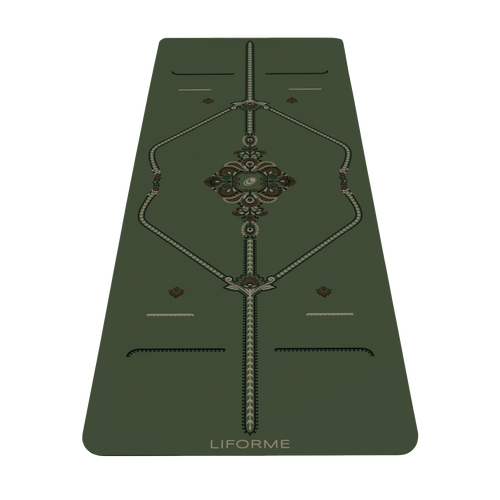
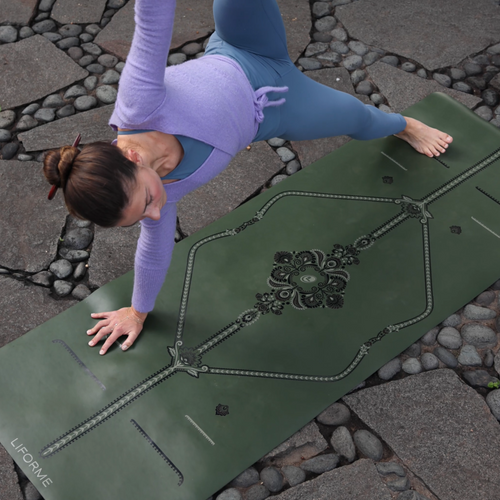
Liforme's AlignForMe system is a patented design that took five years to develop. It uses a Central Line down the middle of the mat, End-to-End lines across both ends, 45-degree lines for the back foot in standing poses, and Reverse Points to guide your placement in seated and kneeling shapes. The markings guide you relative to your own body, so they work whatever your height or your level of experience.
Before 2013, no yoga mat looked like this. Since then, the center line, the end lines, the 45-degree angles, and the reverse points have appeared on mats everywhere, which tells you how well the original idea worked.
Liforme remains the original, patented one.

Which Mat Suits My Style of Practice?
Best Yoga Mat for Hot Yoga and Bikram
Heat and sweat together are the hardest test for a mat. For hot yoga and Bikram, an absorbent surface works better than a closed-cell one that becomes slick the moment moisture sits on top of it.
Our mats are great for hot yoga because the grip doesn't change no matter how much they absorb, and you won't slip during Bikram sequences either.

Best Yoga Mat for Vinyasa and Power Yoga
When you're flowing through fast transitions, grip and a mat that stays flat matter.
The right vinyasa mat holds its position through jump-backs, and a power yoga mat needs to cope with the sweat that comes with the pace. Liforme mats do both. The natural rubber base keeps the mat where you put it, and the absorbent top surface holds your hands and feet as the sweat builds.
Best Yoga Mat for Ashtanga, Iyengar and Jivamukti
A sequence that you practice daily can benefit from consistent reference points, which is why alignment guidance is so helpful for Ashtanga, Iyengar, and Jivamukti mats. Checking your stance against the alignment points builds good habits and improves your practice over time.
Best Yoga Mat for Yin and Restorative Yoga
Long holds put your weight into your joints for minutes at a time, so the main priority here is comfort.
A Yin mat needs enough padding to allow you to hold a shape without your joints objecting, and our cushioned mats do just that at 4.2mm. A Yoga Pad under the knees or sacrum makes the longest holds easier still.
Best Yoga Mat for Pilates
Our mats aren't just for yoga. Spinal rolling and shoulder bridges ask for cushioning along the spine and a surface that holds still when you press through your feet, and the same grip and thickness that work for yoga cover Pilates too, so with one mat you can practice both.
Best Yoga Mat for At-Home, On-Carpet or Hardwood Practice
At home, you may have carpet or hardwood floor. Carpet lets a mat sink in and shift as you move, while hardwood punishes anything that slides. The answer to both is natural rubber, which has enough weight and traction to stay put on soft carpet, and enough grip to hold on smooth hardwood floors.

Compare Liforme Yoga Mats
All Liforme mats share the same GripForMe surface, the same non-toxic materials, and a free mat bag. What changes is the size, the weight, and the amount of alignment guidance, so use the table below to quickly work out what will suit you best.
| Mat | Best for | Alignment guide | Size | Weight |
|---|---|---|---|---|
| Standard | Everyday practice, all levels | Full AlignForMe, etched | 72.8 x 26.8 in (185 x 68cm) | 5.5 lb (2.5kg) |
| Evolve | A simpler visual field | Central Line and End-to-End lines only | 72.8 x 26.8 in (185 x 68cm) | 5.5 lb (2.5kg) |
| Travel | Class, commuting, holidays | Full AlignForMe | 70.8 x 26 in (180 x 66cm) | 3.5 lb (1.6kg) |
| XL | Taller yogis, more room to move | Full AlignForMe with extra reference points | 82.7 x 27.6 in (210 x 70cm) | 7.7 lb (3.5kg) |
| Kids | Children | Proportional AlignForMe | 57.5 x 24 in (146 x 61cm) | 4.4 lb (2kg) |
| Yoga Pad | Knees, elbows, handstands | Central Line | 25 x 13 in (64 x 33cm) | 1.4 lb (0.65kg) |
Choosing Your Design
Choosing a design that inspires you will inspire a better practice too. Unrolling something you love is a small pleasure that makes it easier to show up even on days when you'd rather not.
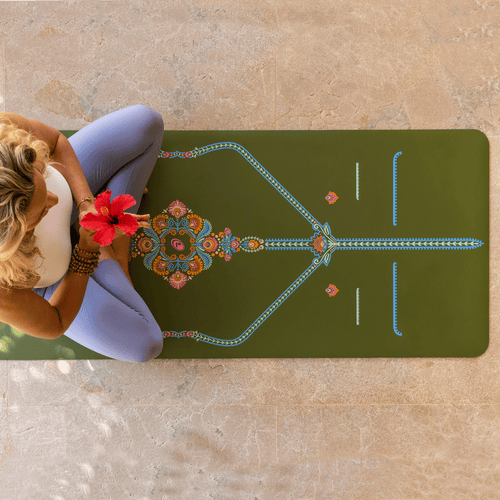
Every design carries the same alignment system, so pick the one that speaks to you the most. There's plenty to be inspired by, and we add new designs regularly, so take a look through the full range to find yours.
If color is where you start, browse black, grey, white, blue, green, purple, pink, red, orange, yellow, and olive mats, or see all our printed and patterned yoga mats in one place.
And, for something truly unique, Liforme X You lets you build your own, choosing the surface color, the alignment guide, and the artwork, so you can make your practice truly one of a kind.

What Makes a Liforme Mat Different from Others
The first Liforme mat launched in 2013 after five years of development, introducing an innovative grip surface and an alignment guide that no other mat had, and that many have tried to replicate since.
GripForMe surface
Not sticky, just absorbent, so it grips harder the more moisture it takes in.
AlignForMe guide
Our patented alignment system, with proportional markings that guide your placement as your practice develops.
Non-toxic and PVC-free
Made from natural rubber with a specially engineered eco-polyurethane top layer, certified vegan, and biodegradable in normal landfill conditions.
CleanGrip construction
A patented barrier layer sits between the top surface and the rubber base, keeping sweat from soaking through, which is what makes mats smell.
B Corp certified since 2022
We fund environmental and social projects with every mat sold, working with Tree-Nation, CleanHub, Friends of the Earth, and Yoga Gives Back. Read about how we give back.
Money-back guarantee
We're so sure you'll love your mat that we'll take it back if you don't. See our money-back guarantee for the full details.
If you want more details behind any of these, our product innovations pages go deeper, and our reviews are where you'll find what yogis make of them in practice.
Still Deciding?
Choosing a mat gets much simpler once you know what matters. Get the size and the grip right, and the rest is yours to enjoy. Browse the full range of yoga mats, or get in touch and we'll help you decide.

FAQs About Finding the Right Yoga Mat
What should I look for when buying a yoga mat?
Grip, size, thickness, weight, and materials. A mat needs to hold you when your hands are damp, be longer than you are tall, and sit around 4mm to 5mm thick for most practices.
What size yoga mat do I need?
Your mat should be longer than your height. Standard mats are often 68 in (173cm), which leaves a lot of people running out of space. Ours start at 72.8 in (185cm), with the XL at 82.7 in (210cm) for anyone over about 6 ft.
How thick should a yoga mat be?
Around 4mm to 5mm suits most people. Ours are 4.2mm, and a Yoga Pad adds cushioning under the knees without affecting stability elsewhere.
Are thicker yoga mats better?
Not usually. Above about 6mm, you lose the connection to the floor that keeps you steady in standing balances. If your knees need padding, add a pad under them.
Which yoga mat is best for hot yoga?
One that grips when wet. Liforme's unique GripForMe surface grips harder the more moisture it absorbs, so no mat towel is necessary.
What is a yoga mat made of, and does it matter?
It affects grip, weight, smell, and lifespan. PVC is cheap and hard to recycle, natural rubber grips well and biodegrades, and TPE is light but wears faster. Ours use natural rubber with an eco-polyurethane top layer.
Do I need alignment markings on a yoga mat?
Alignment markings are great because they give you a reference to check your stance against, which builds good habits and improves your practice over time.
How long does a yoga mat last?
A budget mat often won't last long before the surface flakes or thins. A well-made one, cleaned and stored properly, should last for years.
Can I use a yoga mat for Pilates?
Yes. Pilates asks for grip and cushioning along the spine, which is what a good yoga mat already gives you.
Can I fold my yoga mat?
Avoid folding your mat. Folding creases the top surface permanently, so always roll it, colored side facing out.
Are Liforme mats suitable for me if I have a latex allergy?
Our mats are made with natural rubber, so they aren't suitable for anyone with a latex allergy.