€ EUR
€ EUR

Yoga is often called a mind-body practice, which means it helps foster a strong connection between your mental and physical aspects for the benefit of both.
While a lot of digital ink is spilt on the admittedly awesome subjects of yoga’s ability to improve strength and flexibility, not as much attention goes to yoga’s unique capacity for mental grounding and healing. So, let’s take a deep dive into how your mind can be affected by the actions of your body.
Can Yoga Help Improve Your Mental Health?
Emphatically, yes! Yoga is proven to reduce stress and anxiety, which are major factors in mental health for many people. Additionally, doing yoga can give your brain a break from its constant activity, promote a growth mindset, and increase your confidence. Doing yoga in group classes also connects you to a community, which can reduce feelings of isolation.
Physiologically, moving your body and practising deep breathing help activate your parasympathetic nervous system, releasing the ‘rest and digest’ hormones that make you feel safe and protected. Movement is also your body’s outlet for processing the stress hormones that make you disregulated and anxious.
All that said, yoga is not a cure-all. While many people see an improvement in their mental health from regular yoga practice, it’s not a replacement for the roles that therapy and, when appropriate, medication play. Taking a holistic approach to health includes looking at the body as an entire entity in which all practices and modalities are available in support of your well-being.
Benefits of Yoga for Mental Health at a Glance
- Helps reduce stress and supports mental and emotional well-being.
- May improve sleep quality and support cognitive function.
- Studies also suggest that yoga-based interventions have been associated with reduced anxiety symptoms in anxiety disorders and reduced depressive symptoms in depressive disorders.
17 Yoga Poses to Boost Your Mental Health
 Featured Yoga Mat: Rainbow Yoga Mat in Blue Sky
Child’s Pose (Balasana)
Sanskrit Meaning: Bala (Child) Asana (Pose)
Yoga Level: Beginner
Pose Type: Prone
Benefits: Stretches your arms, shoulders, and back. Opens your hips
Why This Pose: Child’s Pose is a very nurturing position that is available any time you need a break.
Step-by-Step Instructions:
- Begin in a hands and knees table-top position.
- Open your knees to the edges of your mat.
- Sink your bottom to your heels.
- Lower your forehead to the floor.
 Featured Yoga Mat: Blossoming Lotus Mat in Purple
Cat-Cow Pose (Marjaryasana-Bitilasana)
Sanskrit Meaning: Marjary (Cat) Bitil (Cow) Asana (Pose)
Yoga Level: Beginner
Pose Type: Kneeling
Benefits: Improves spinal mobility and core strength.
Why This Pose: Integrating breath and movement in this simple vinyasa brings mental clarity and strengthens the mind-body connection.
Step-by-Step Instructions:
- Begin in a hands and knees table-top position.
- On an inhalation, drop your belly as you lift your head and tail.
- On an exhalation, round your spine toward the ceiling while tucking your tail and lowering your head.
- Repeat these motions on each inhale and exhale for several cycles of breath.
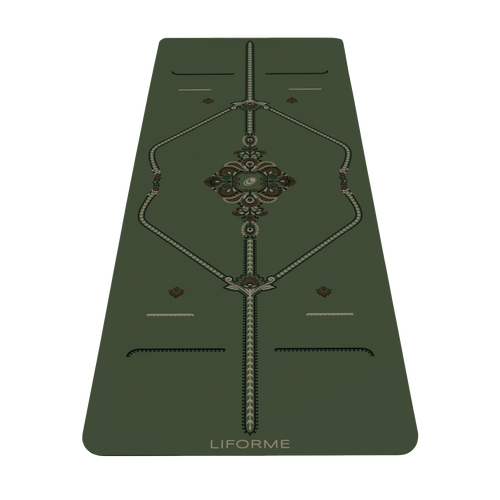
 Featured Yoga Mat: Mindful Garden Mat in Olive
Easy Pose (Sukhasana)
Sanskrit Meaning: Sukha (Easy) Asana (Pose)
Yoga Level: Beginner
Pose Type: Seated
Benefits: Opens your hips and groins. Improves your posture.
Props: Block, bolster, or blanket.
Why This Pose: Finding comfort in this position can be challenging, so it provides a lesson in using the resources that are available to you (in this case, props).
Step-by-Step Instructions:
- Come to sit in a comfortable cross-legged position.
- Take a prop (block, bolster, or blanket) under your sit bones to raise your hips above your knees.
- Let your hands rest on your thighs with the palms turned up for receptivity or down for grounding.
 Featured Yoga Mat: Liforme Classic Yoga Mat in Grey
Bound Angle Pose (Baddha Konasana)
Sanskrit Meaning: Baddha (Bound) Kona (Angle) Asana (Pose)
Yoga Level: Beginner
Pose Type: Seated
Benefits: Stretches the hips, groins, shins, and feet.
Why This Pose: A gentle and supported opening of the hips often feels healing.
Step-by-Step Instructions:
- Take a prop under your seat to raise your hips above your knees.
- Sitting on your prop, bend your knees and bring the soles of your feet close to your butt.
- Open your knees to either side of your mat and bring the soles of your feet together.
- Keep your spine long (sitting on props will help) and let gravity pull your knees down.
 Featured Yoga Mat: Liforme Classic Yoga Mat in Blue
Seated Forward Bend (Paschimottanasana)
Sanskrit Meaning: Paschima (the West/back of the body) Uttana (Stretch) Asana (Pose)
Yoga Level: Beginner
Pose Type: Seated
Benefits: Stretches the hamstrings, calves, and back.
Why This Pose: Stretching the legs releases tension while forward folding is very grounding.
Step-by-Step Instructions:
- If you’ve been finding props under your seat more comfortable, you can use them in this posture too.
- Sit on your mat with your spine long. Stretch your legs out straight in front of you and flex your feet.
- On an exhalation of breath, tip your pelvis forward to rotate your torso into a forward bend. Keep your spine straight until you have come to your maximum forward rotation. At that point, you can choose to round your spine or keep it long.

Half Lord of the Fishes Pose (Ardha Matsyendrasana)
Also Known As: Seated Spinal Twist
Sanskrit Meaning: Ardha (Half) Matsyendra (Lord of the Fishes) Asana (Pose)
Yoga Level: Beginner
Pose Type: Seated
Benefits: Strengthens the abdominal muscles, stretches the intercoastal muscles, hips, and glutes.
Why This Pose: Twists are good for digestive health, which keeps your body feeling good.
Step-by-Step Instructions:
- From Easy Pose, keep both knees bent and bring the sole of your right foot to the mat on the outside of your left hip.
- Bring your left elbow outside your right knee as you rotate your torso to the right.
- On your inhalations, lengthen your spine. On your exhalations, deepen your twist.
- Repeat on the other side.
 Featured Yoga Mat: Liforme Classic Yoga Mat in Purple
Downward Facing Dog Pose (Adho Mukha Svanasana)
Sanskrit Meaning: Adho (Down) Mukha (Face) Svana (Dog) Asana (Pose)
Yoga Level: Beginner
Pose Type: Standing
Benefits: Strengthens and stretches your entire body.
Why This Pose: If you only have time for one pose, Downward Facing Dog packs a powerful punch.
Step-by-Step Instructions:
- From a tabletop position, curl your toes under and press into your palms to lift your butt toward the ceiling.
- Straighten your legs and release your heels toward the floor.
- Check your alignment to make sure your feet and hands are equidistant from the central line of your mat.
- Continue pressing into your palms and dropping your heels. Release your head and let it hang heavy.
 Featured Yoga Mat: XL Mountain Yoga Mat
Crescent Lunge Pose (Anjaneyasana)
Sanskrit Meaning: Anjani (Hindu Goddess) Asana (Pose)
Yoga Level: Beginner
Pose Type: Kneeling
Benefits: Stretches the quads, hamstrings, and hips. Strengthens the core.
Why This Pose: Opening your chest makes you less closed off and more receptive.
Step-by-Step Instructions:
- From Downward Facing Dog, step your right foot to the inside of your right hand.
- Stack your right knee over your right ankle.
- Release your left knee to your mat, using a Yoga Pad or folded blanket under it if it is sensitive.
- Lift your arms overhead and open your chest to the front of the room.
- Repeat on the other side.
 Featured Yoga Mat: Cosmic Moon Yoga Mat in Black
Standing Forward Bend (Uttanasana)
Sanskrit Meaning: Uttana (Intense Stretch) Asana (Pose)
Yoga Level: Beginner
Pose Type: Standing
Benefits: Stretches your hamstrings and glutes. Releases the spine.
Why This Pose: A Standing Forward Bend is an opportunity to do a brain drain, letting your thoughts fall out of the top of your head.
Step-by-Step Instructions:
- Stand at the front of your mat with your feet parallel.
- On an exhalation of breath, fold over your legs by tipping your pelvis forward.
- When you have come to your full forward rotation, let your head and arms hang heavy.
 Featured Yoga Mat: Liforme Classic Yoga Mat in Dusk Blue
Garland Pose (Malasana)
Sanskrit Meaning: Mala (Garland) Asana (Pose)
Yoga Level: Beginner
Pose Type: Standing
Benefits: Stretches and strengthens the feet, ankles, knees, and hips.
Why This Pose: This pose often causes intense sensation, to which you can observe your reaction. Using props also teaches you to accept help.
Step-by-Step Instructions:
- Stand at the front of your mat with your feet at the edges of your mat and your heels turned in.
- Bend your knees and lower your butt toward the floor, coming into a deep squat.
- Adjust your feet as necessary, but keep your heels on the floor. If that’s not possible, roll up a blanket and slide it under your heels so they have something to ground into.
- Take your elbows to the inside of your knees and exert gentle pressure outwards. Bring your hands to Anjali mudra at your heart.
 Featured Yoga Mat: Mindful Garden Yoga Mat in Purple
One-Legged King Pigeon Pose (Eka Pada Rajakapotasana)
Sanskrit Meaning: Eka (One) Pada (Foot) Raja (King) Kapota (Pigeon) Asana (Pose)
Yoga Level: Intermediate
Pose Type: Seated
Benefits: Opens the pelvic and buttock muscles. Stretches the hamstrings and quads.
Why This Pose: Opening your hips often helps release emotions and sometimes tears!
Step-by-Step Instructions:
- From Downward Facing Dog, bring your right knee forward to your right hand. Lower your knee to the mat, bringing your right ankle close to your left hand.
- Lower your left hip to the floor, scooting your left foot backwards if necessary.
- If your right buttock doesn’t come to the mat, slide a folded blanket or a bolster under it for support.
- Forward fold over your right leg.
- Repeat on the other side.
 Featured Yoga Mat: Liforme Classic Yoga Mat in Purple
Bridge Pose (Setu Bandhasana)
Sanskrit Meaning: Setu (Bridge) Bandha (Lock) Asana (Pose)
Yoga Level: Beginner
Pose Type: Supine Backbend
Benefits: Opens your chest and shoulders, strengthens your glutes, promotes spinal mobility.
Why This Pose: This heart opener expands your chest in a supportive way.
Step-by-Step Instructions:
- Come to lie on your back.
- Bend your knees and place the soles of your feet flat on the mat close to your buttocks.
- On an inhalation, press into your feet to lift your hips toward the ceiling.
- Roll your shoulders under your body one at a time to support the opening of your chest. You can clasp your hands behind your back if you choose.
- Lower down and repeat the Bridge twice more.

Happy Baby Pose (Ananda Balasana)
Sanskrit Meaning: Ananda (Blissful) Bala (Baby) Asana (Pose)
Yoga Level: Beginner
Pose Type: Supine
Benefits: Stretches the inner and outer thighs, hamstrings, and glutes.
Why This Pose: Anchoring your sacrum to the floor is very grounding.
Step-by-Step Instructions:
- Lie on your back with your knees bent and pointing at the ceiling.
- Lift your feet off the floor and take hold of the outside edge of each foot with the corresponding hand.
- Flex your feet as if you were standing on the ceiling. Draw your knees toward your armpits while keeping your ankles stacked over your knees.
- Be sure to keep your sacrum in contact with the floor.
 Featured Yoga Mat: Radiant Sun Yoga Mat in Yellow
Wind Relieving Pose (Pavanamuktasana)
Sanskrit Meaning: Pavana (Wind) Mukta (Liberating) Asana (Pose)
Yoga Level: Beginner
Pose Type: Supine
Benefits: Compression of the hips and abdomen.
Why This Pose: It feels good to give yourself a hug.
Step-by-Step Instructions:
- Lie down on your back with your knees bent.
- Lift your feet and hug your knees into your chest.
- Keep your head on the floor.
- Give yourself a good squeeze.
 Featured Yoga Mat: Tantalising Terracota Yoga Mat
Reclined Bound Angle Pose (Supta Baddha Konasana)
Sanskrit Meaning: Supta (Reclined) Baddha (Bound) Kona (Angle) Asana (Pose)
Yoga Level: Beginner
Pose Type: Supine
Benefits: Opens the hips, groins, and inner thighs.
Why This Pose: Spending a few minutes in a restorative pose helps you release tension you didn’t know you were carrying.
Step-by-Step Instructions:
- Lie down on your back with your knees bent and pointing at the ceiling.
- Open your knees to either side of your mat while bringing the soles of your feet to touch in the middle.
- If your knees don’t reach the floor, take blocks, bolsters, or blankets under them for support.

Legs Up the Wall (Viparita Karani)
Sanskrit Meaning: Viparita (Inversion) Karani (to do) Asana (Pose)
Yoga Level: Beginner
Pose Type: Inversion
Benefits: Offers relief for tired legs. Improves circulation and lymphatic function.
Why This Pose: Nothing says self-care like putting your feet up.
Step-by-Step Instructions:
- Bring your mat over to a wall.
- Sit with your knees bent, the soles of your feet flat on the floor, and the side of your body in contact with the wall.
- Roll over onto your back and take your legs up the wall.
 Featured Yoga Mat: Expressions Yoga Mat in Happiness Orange
Corpse Pose (Savasana)
Sanskrit Meaning: Sava (Corpse) Asana (Pose)
Yoga Level: Beginner
Pose Type: Supine
Benefits: Experience total relaxation and let your body absorb the benefits of your practice.
Why This Pose: Nothing is more grounding than lying your whole body down on the floor.
Step-by-Step Instructions:
- Lie down on your back.
- Separate your legs and let your feet fall out to either side.
- Bring your arms in a relaxed position on either side of your body with your palms turned upwards.
- Close your eyes and try to release any tension from every part of your body.
Any Pose Will Do
While each of the above poses is good for your mental and physical health, the truth is that it doesn’t really matter which poses you do as long as you consistently get on your mat to practice. Each and every yoga posture stretches and strengthens multiple parts of your body and provides the many mental benefits of mindful movement.
Consider these poses a jumping-off point for your own yoga explorations.
Additional Reading: How Yoga Improves Your Mental Health in 4 Surprising Ways
Yoga for Mental Health FAQs
Can yoga help improve mental health?
Yoga can support mental well-being by helping reduce stress and encouraging a calming nervous system response, especially when movement is paired with steady breathing.
What type of yoga is best for stress and anxiety?
There isn’t a universal answer because it depends on what kind of movement you enjoy and your experience. Gentle, slower-paced styles are often a supportive place to start, but intense styles can also relieve stress by giving you a "brain break."
How often should I practice yoga for mental health benefits?
Consistency matters more than intensity. Even 10–20 minutes a few times a week can be a helpful routine.
Is yoga a replacement for therapy or medication?
No. While yoga is a powerful tool for well-being, it should be viewed as a complementary practice rather than a replacement for professional mental healthcare.