£ GBP
£ GBP

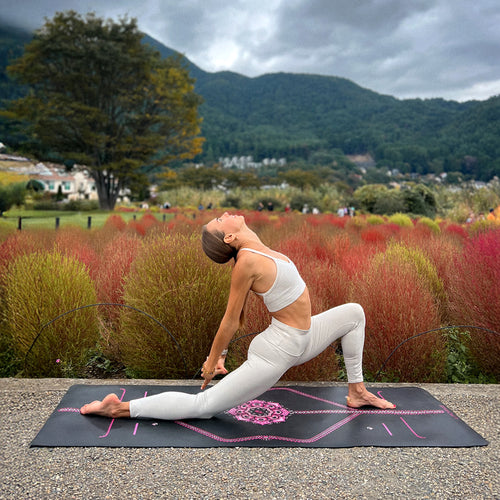
Anjaneyasana is a tricky pose to pin down. It goes by more than a few names (Ashva Sanchalanasana or Equestrian Pose, for example), has just as many variations, and can be approached in several ways in terms of alignment and muscular engagement. There’s no one right way to do this pose, and each approach creates a different effect.
Let’s call the two basic approaches passive versus active. The passive version leans on gravity and a grounded back knee for a front-of-hip stretch. In this version, the front knee often comes well past the front ankle, and the back thigh approaches the floor.
While this kind of deep stretch can feel good, there is a risk of overdoing it, which can lead to instability and pain around the hip joints and low back, especially as the effects accumulate over time. For that reason, we recommend engaging the muscles that you are stretching, which takes the stretch from passive to active as you create some resistance to gravity. It may look less deep, but it’s a more effective long-term practice strategy.
Step-by-Step Instructions for Anjaneyasana
1. From Downward Facing Dog, step your right foot to the inside of your right hand. If your foot doesn’t make it to the front of your mat, use your right hand to help it along.
2. Lower your left knee to the mat. If kneeling feels uncomfortable, add extra padding under your knee; a Yoga Pad works especially well here, but you can also use a folded blanket.
3. Release the top of your left foot to the floor.
4. Bring your hands to your hips or rest them on your right thigh.
5. To intensify the stretch along the front of the left hip and thigh, glide your hips a little toward the front of the mat.
6. Press strongly down through the top of your left foot and the sole of your right foot to bring tone to the muscles you are stretching. Lightly engage your glutes and quads.
7. Isometrically draw your feet toward each other.
8. On an inhalation, lift your arms out to the sides and up toward the ceiling, taking your gaze up toward your thumbs. You can bring your palms to touch overhead or keep them at shoulder’s distance apart.
9. Exhale to lift your sternum, extend your spine, and come into a backbend.
10. Hold for several breaths before releasing and coming to the other side.
🧘 Tip from a Yogi
"The crescent that gives this pose its name comes from the shape made when you take the upper body into spinal extension (also known as a backbend). The degree of back-bending affects the approach you take to the lower body. If you go deep into the front knee, it brings the pelvis into an anterior tilt, which naturally accentuates the lumbar curve of the spine. If you take the more upright version, the pelvis stays more neutral and spinal extension in the lower back is, therefore, less intense."
Low Crescent Lunge Basics
Sanskrit Meaning: Anjani (Hindu Goddess), Asana (Pose)
Yoga Level: Beginner
Pose Type: Kneeling
Pose Category: Hip opener
Common Props: Yoga pad, blocks under hands
Benefits of Anjaneyasana
- Stretches and strengthens the groin, hip flexors, and quadriceps
- Opens the chest
- Builds core strength and improves balance
- Can improve spinal mobility
Key Alignment Cues for Low Crescent Lunge
-
Active Over Passive
Engage the muscles you’re stretching to stabilize your hips and lower back. -
Vertical Front Shin
Avoid letting the front knee drift far past the ankle if it causes your back to collapse; a vertical shin often equals a safer load. -
Backbend From the Upper Spine
Keep the pelvis neutral as you lift your arms and chest so the backbend, or crescent, happens higher up in the spine, rather than compressing the lower back.
Beginner Tips for Anjaneyasana
- If the balance is wobbly, keep your hands on your front thigh instead of overhead.
- For tight hips, shorten the stance and stay more upright to focus on active strength over passive depth.
- If kneeling feels uncomfortable, pad the back knee generously.
Variations & Modifications

Anjaneyasana With Quad Stretch
1. Bend your back (left) knee and catch the foot with your left hand.
2. Draw your heel toward the left glute any amount for a quadriceps stretch.
3. Experiment with engaging the quads more for a little resistance against the pressure from your hand.
4. Use knee padding. There’s quite a bit of downward force on your back knee here.
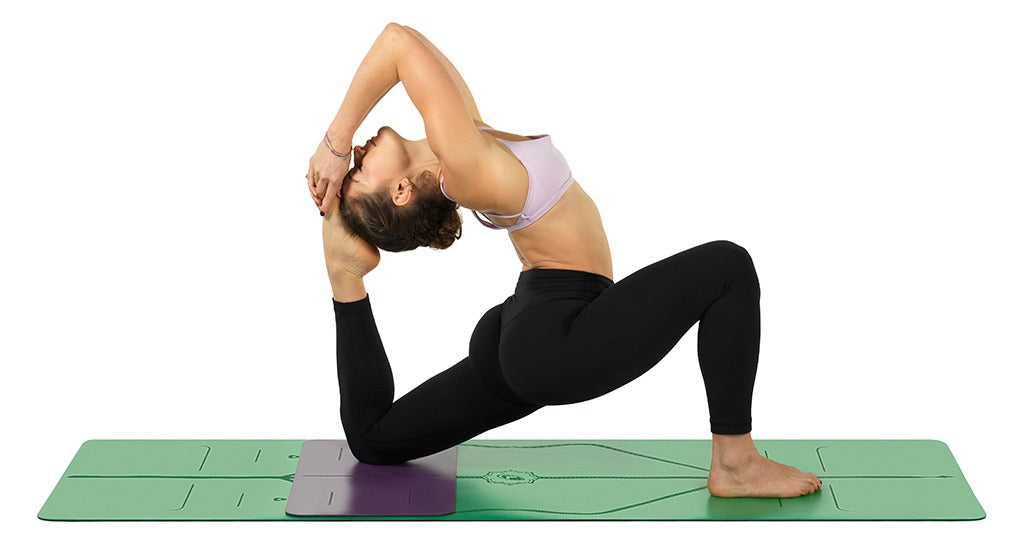
Anjaneyasana With a Deep Backbend
1. From the quad stretch variation, let your hips come forward as much as possible to facilitate the extension of the whole spine.
2. Keep hold of the left foot with your left hand. Reach up and overhead with your right hand, extending through the crown toward the back of the mat.
3. If possible, catch hold of your left foot with your right hand as your right elbow points straight up to the ceiling. Let go of the foot with your left hand and bring that arm overhead to flip your grip and hold the left foot with both hands.
4. Release the crown of your head toward the sole of your left foot.
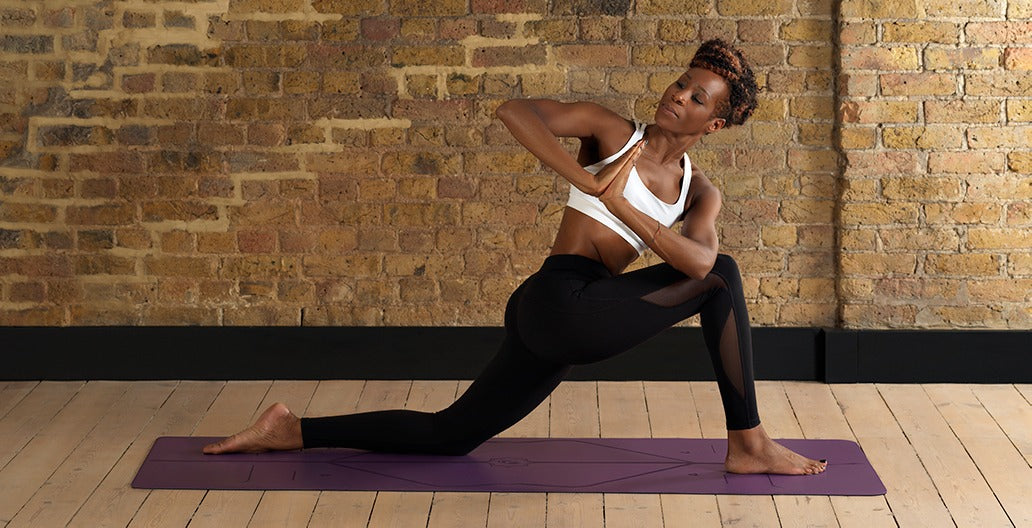
Revolved Low Crescent Lunge (Parivrtta Anjaneyasana)
1. Come back to the original pose with your right leg forward.
2. Bring your hands to Anjali mudra at your sternum.
3. Inhale to lift your left elbow and trace a big circle with it as you rotate your torso to the right.
4. Complete the circle on your exhalation by hooking your left elbow to the outside of your right knee.
5. Use the traction between your elbow and knee to deepen your twist.

Parivrtta Anjaneyasana With Quad Stretch
1. From Parivrtta Anjaneyasana, release Anjali mudra and lift your torso to place your left hand on the outside of your right knee.
2. Bend your left knee and lift your left heel toward your left buttock.
3. Reach back with your right hand to grab the outside of your left foot.
4. Lift your left arm toward the ceiling.
Why We Practice Anjaneyasana
Low Crescent Lunge is a friendly doorway into hip opening and gentle backbending without overwhelming the lower back. Practiced actively, it builds strength, especially through the deep core, quads and hip flexors. It also helps develop the upper back mobility needed for heart openers, making this a smart prep for poses like Ustrasana.
Anjaneyasana lends itself to the exploration of many variations and meets you where you are; be creative and find your unique expression with this posture.
Low Crescent Lunge FAQs
What muscles does Low Crescent Lunge work?
Low Crescent Lunge primarily stretches the hip flexors, groins, and quadriceps while strengthening the glutes, hamstrings, and core. When you lift your arms overhead, it also engages the shoulders and upper back.
What’s the difference between High Crescent Lunge and Low Crescent Lunge?
In Low Crescent Lunge, the back knee rests on the floor, which provides stability and allows you to focus on hip-opening and backbending. In High Crescent Lunge, the back knee is lifted, making it a more active balance pose that builds leg strength and endurance.
Is Anjaneyasana good for back pain?
It can be, especially for opening tight hip flexors that contribute to low-back tension. However, if you already have back pain, keep the pose active and avoid deep backbends unless cleared by a healthcare professional.
When should I avoid Low Crescent Lunge?
Skip or heavily modify if you have acute knee injuries, recent hip surgery, or sharp pain in the low back.