£ GBP

Adding strength training to your exercise routine has a host of benefits for health and longevity, especially when you pair it with yoga. Lifting weights builds muscle but can also create tightness. Yoga balances things out by improving your mobility, breath and body awareness, alignment, and stability. So, if you feel stiff after strength training and want to reduce your chances of injury, try these yoga poses to stretch and strengthen your hips, shoulders, hamstrings, and back.
🧘 Tip from a Yogi
"Listen to your body, especially after a tough workout. Some muscle soreness is normal after strength training, so avoid forcing deep stretches into fatigued or super achy muscles. Yoga doesn't need to be another demanding workout. Gentle movement may feel really good, and yoga extends way off the mat, into all aspects of our lives- even the much-deserved Epsom salt bath!”
– Anna Sugarman
The Best Yoga Poses for Strength Training
 Featured Yoga Mat: Blossoming Lotus in Purple
Cat-Cow Stretch (Marjaryasana-Bitilasana)
Sanskrit Meaning: Marjary (Cat) Asana (Pose) Bitila (Cow) Pose (Asana)
Beginner
Pose Type: Kneeling
Why This Pose: Improves spinal awareness and core engagement to support weight training
Step-by-Step Instructions:
1. Come onto your hands and knees, taking a Yoga Pad under the knees if they're sensitive.
2. On an inhale, lift your tail, lower your belly, and lift your head.
3. On an exhale, tuck your tail, round your spine, and lower your head.
4. Continue these movements through several breath cycles, then add any intuitive movements that feel good, for instance moving through Child’s Pose on your exhales or doing barrel rolls with your torso.
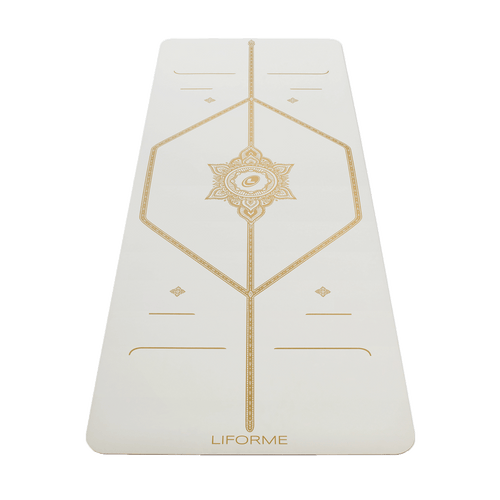
 Featured Yoga Mat: Tropical Paradise
Thread the Needle Pose (Urdhva Mukha Pasasana)
Sanskrit Meaning: Urdhva (Upward) Mukha (Facing) Pasa (Noose) Asana (Pose)
Yoga Level: Beginner
Pose Type: Kneeling
Why This Pose: Stretches your shoulders, which can feel tight after movements like overhead presses, and helps decompress the spine
Step-by-Step Instructions:
1. Come onto your hands and knees.
2. On an inhale, lift your right arm toward the ceiling, opening your chest to the right.
3. On an exhale, thread your right arm behind your left arm, lowering your right shoulder and your head to the floor.
4. Take several deep breaths before changing sides.
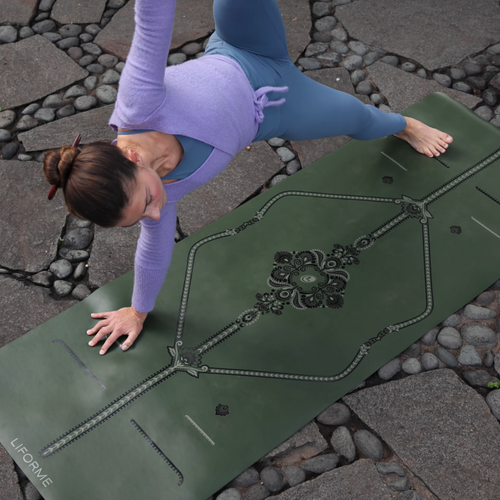
 Featured Yoga Mat: Liforme Classic Yoga Mat in Purple
Puppy Pose (Uttana Shishosana)
Sanskrit Meaning: Uttana (Intense) Shisho (Puppy) Asana (Pose)
Yoga Level: Beginner
Pose Type: Kneeling
Why This Pose: A deep shoulder opener to counteract overhead presses and deadlifts
Step-by-Step Instructions:
1. Come onto your hands and knees.
2. Walk your hands as far forward as possible to bring your chest and chin (or forehead) to the floor, perhaps using a block under the head.
3. Be sure to keep your hips stacked over your knees.
4. Melt your chest towards the floor for several deep breaths.

Crescent Lunge (Anjaneyasana)
Sanskrit Meaning: Anjani (Hindu goddess) Asana (Pose)
Yoga Level: Beginner
Pose Type: Kneeling
Why This Pose: Stretches the hip flexors, which can feel tight after training, and improves hip mobility
Step-by-Step Instructions:
1. Begin on your hands and knees.
2. Step your right foot to the inside of your right hand.
3. Lift your arms overhead.
4. Deepen the bend in your right knee and move your pelvis forward to intensify the stretch.
5. After several deep breaths, change sides.

Revolved Low Lunge
Yoga Level: Beginner
Pose Type: Standing
Why This Pose: Opens the hip flexors while encouraging rotation through the upper and middle back to balance the repetitive forward-and-back movements common in strength workouts
Step-by-Step Instructions:
1. From a hands-and-knees position, step your right foot inside your right hand.
2. Curl your left toes under and straighten your left leg to lift your knee off the floor.
3. Open your chest to the right, lifting your right arm and your gaze towards the ceiling.
4. After several breaths, change sides.

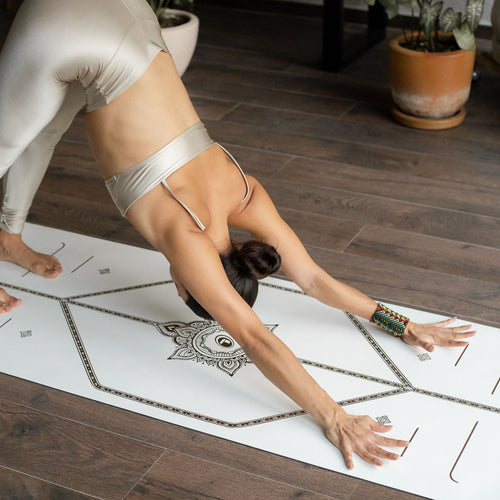
Downward Facing Dog (Adho Mukha Svanasana)
Sanskrit Meaning: Adho (Downward) Mukha (Face) Svanasana (Dog)
Yoga Level: Beginner
Pose Type: Standing
Why This Pose: A full-body stretch that encourages posterior-chain flexibility, shoulder stability, and overall coordination
Step-by-Step Instructions:
1. Begin on your hands and knees.
2. Curl your toes under and press into your palms to straighten your legs and lift your hips toward the ceiling.
3. Bend one knee at a time to pedal your legs.
4. Sink your heels toward the floor.
5. Rotate your upper arms outward to open your trapezius muscles.
6. Take five or more deep breaths.
 Featured Yoga Mat: Liforme Classic Yoga Mat in Dusk Blue
Garland Pose (Malasana)
Sanskrit Meaning: Mala (Garland) Asana (Pose)
Yoga Level: Beginner
Pose Type: Standing
Why This Pose: Helps you explore a deeper range of motion for squats while developing balance, stability, and alignment
Step-by-Step Instructions:
1. Stand at the front of your mat with your feet wide and your heels turned in 45 degrees.
2. Bend your knees to come into a deep squat.
3. Move intuitively in your squat, coming onto the ball of each foot and rotating your torso.
4. Take a rolled blanket under your heels if they are off the floor so you can ground through your whole foot.
5. Take five or more deep breaths.

Side Lunge Pose (Skandasana)
Sanskrit Meaning: Skanda (Hindu War God) Asana (Pose)
Yoga Level: Intermediate
Pose Type: Standing
Why This Pose: This multitasker opens your hips and hamstrings while improving core strength, stability, and spinal mobility
Step-by-Step Instructions:
1. Stand facing the long edge of your mat with your feet wide apart and your heels turned in.
2. Bend your right knee into a deep squat while keeping your left leg straight.
3. Flex your left foot.
3. Take your right hand to the floor outside your right foot.
4. Open your chest to the left, taking your left arm and your gaze toward the ceiling.
5. After several breaths, change sides.
 Featured Yoga Mat: Liforme Classic Yoga Mat in Grey
Sphinx (Salamba Bhujangasana)
Sanskrit Meaning: Salamba (Supported) Bhujanga (Cobra) Asana (Pose)
Yoga Level: Beginner
Pose Type: Prone
Why This Pose: Deadlifts in particular encourage rounded posture, so doing gentle, supported backbends is a necessary counter movement
Step-by-Step Instructions:
1. Lie on your stomach with your elbows bent and stacked under your shoulders.
2. Bring your forearms parallel.
3. Press into your palms and forearms to drop your shoulders and draw your chest forward.
4. Keep your legs actively pressing down.
5. Take at least five deep breaths.

Seated Eagle Arms (Garudasana)
Sanskrit Meaning: Garuda (Eagle) Asana (Pose)
Yoga Level: Beginner
Pose Type: Seated
Why This Pose: Stretch your quads and open the upper back with this seated variation
Step-by-Step Instructions:
1. Sit in a kneeling position with your sit bones on your heels or a block.
2. Extend both arms forward.
3. Cross your left arm over your right arm at the elbow.
4. Bend both elbows and bring your palms to touch.
5. Lift your elbows to deepen the stretch across your upper back.
6. After several breaths, repeat the pose with the right arm over the left.
Benefits of Yoga for Strength Training
-
Stretches Tight Areas
Big muscles tend to be tighter muscles. Yoga helps keep everything in balance.
-
Improves Mobility
Keep your range of movement even as you lift heavy
-
Reinforces the Importance of Form for Injury Prevention
Good form is crucial in both yoga and weightlifting to avoid injuries as much as possible
-
Supports Joint Health
Strengthens the small muscles that support your knees, hips, and shoulders.
Tips for Practicing Yoga alongside Strength Training
1. Timing is Everything
Before strength training, focus on dynamic yoga movements and/or short holds that gently warm up your muscles and take your joints through a comfortable range of motion. Save longer stretches for after your workout or separate yoga sessions, where you can go deeper.
2. A Little Yoga Goes a Long Way
You don't need an hour-long yoga class to feel the benefits. Even 5–10 minutes of targeted movement before or after strength training can help with mobility, flexibility, and body awareness. Consistency matters more than duration.
3. Breathe Through Your Movements
One of yoga's greatest benefits is the connection between breath and movement. Slow, steady breathing can help you relax unnecessary tension, stay present, and move with greater awareness. During heavy lifting, breathing and bracing techniques appropriate to the exercise provide stability and safety.
Balance Strength with Mobility
Yoga and strength training can complement one another beautifully, helping you build not only stronger muscles but also greater mobility, balance, and body awareness. Whether you have five minutes or fifty, making space for yoga supports a more sustainable, well-rounded movement practice that can strengthen the mind too.
FAQs About Yoga for Strength Training
Is yoga good for strength training?
Yoga is a wonderful complement to strength training because it relieves tightness and improves mobility while also helping your form and breath awareness.
Should I do yoga before or after lifting weights?
You can warm up with a few yoga poses before lifting but save deeper stretching for after your session or in separate yoga classes.
Can yoga improve my performance in the gym?
Yoga improves your stability and weightlifting form, which can help your performance, but integrating some yoga into your routine is more about bringing physical balance and mental calmness to your life.
Which yoga poses are best for weightlifters?
Choose gentle stretches to relieve tightness in your hips, shoulders, hamstrings, and back. Standing poses are a good way to stabilize your joints and work on alignment.
Can yoga help prevent gym injuries?
Yoga can help prevent injuries caused by limited mobility, joint instability, and lack of attention to form.
How often should strength athletes practice yoga?
Yoga or stretching should be part of your regular routine two to three times a week.
Will yoga make me less strong or interfere with my gains?
No, the work you put in at the gym isn’t negated by the work you put in on the mat.