€ EUR
€ EUR

Although there are hundreds of yoga poses, there is a much smaller group of core poses that beginners need to know. These fundamental poses introduce the basics of alignment, build strength, flexibility, and balance, and form a canon from which endless variations are possible. Learn these 15 poses, and your practice will be off to an excellent start.
Prepare to Begin
Before we jump in, just a few things to keep in mind:
-
Remember that everyone who does yoga has stood where you are now, as a complete beginner.
-
Don’t force your body into any position. Always adapt the pose to your body, not your body to the pose.
-
Speaking of which, use props freely. Blocks are especially useful in poses where the ground feels far away.
-
If you have any preexisting injuries or medical conditions, consult your doctor before
starting yoga to see if there are any movements you should avoid.
The 15 Best Yoga Poses for Beginners
Standing Poses
Standing poses are the core of modern yoga practices. They build strength, balance, and coordination. These foundational poses establish good alignment habits.
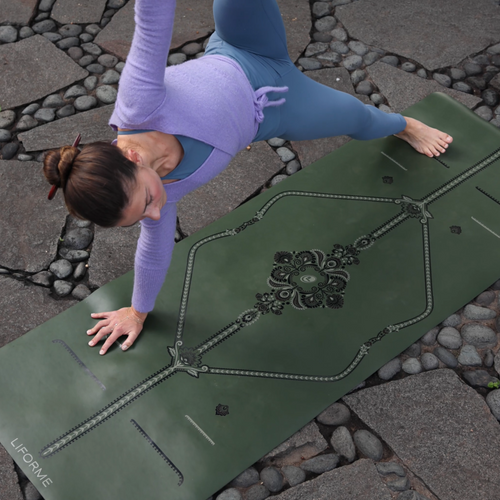
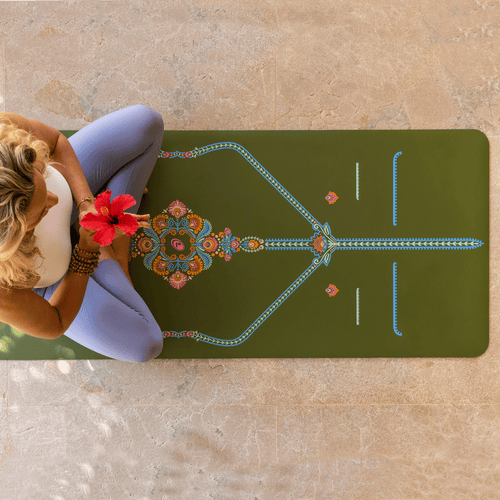
 Featured Yoga Mat: Mindful Garden in Olive
Mountain Pose (Tadasana)
Sanskrit Meaning: Tada (Mountain) Asana (Pose)
Pose Type: Standing
Why This Pose: The foundation of all standing poses
Step-by-Step Instructions:
1. Stand at the front of your mat with your feet hip distance apart.
2. Stack your knees over your ankles.
3. Stack your hips over your knees.
4. Stack your shoulders over your hips.
5. Keep your head in a neutral position.
6. Engage your quads and draw your kneecaps up.
7. Slide your shoulders away from your ears.
8. Maintain this position for at least 5 breaths.
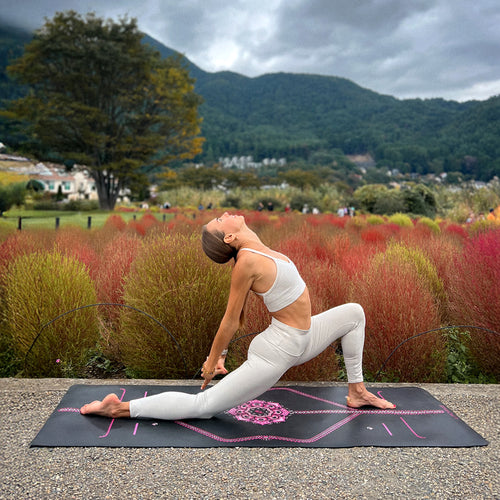
 Featured Yoga Mat: Liforme Classic Yoga Mat in Purple
Downward Facing Dog Pose (Adho Mukha Svanasana)
Sanskrit Meaning: Adho (Downward) Mukha (Face) Svanasana (Dog)
Pose Type: Standing
Why This Pose: One of the most iconic yoga poses
Step-by-Step Instructions:
1. Begin on your hands and knees with your shoulders over your wrists and your hips over your knees.
2. On an exhalation, curl your toes under and lift your hips towards the ceiling.
3. Your body will be in an inverted V position.
4. Bend your knees slightly and lift your hips.
5. Straighten your legs and release your heels toward the floor.
6. Press into your palms, pushing the floor away.
7. Let your head hang heavy.
8. Stay here at least 5 breaths.
 Featured Yoga Mat: Mindful Garden in Purple
Warrior I Pose (Virabhadrasana I)
Sanskrit Meaning: Virabhadra (Hindu Warrior) Asana (Pose)
Pose Type: Standing
Why This Pose: Establishes the alignment for hips-forward poses
Step-by-Step Instructions:
1. Begin in Mountain Pose.
2. Bend your right knee and step your left foot toward the back of your mat.
3. Land your left foot at a 45-degree angle with your toes pointing out.
4. Adjust so that your right knee is stacked over your ankle, and your hips are both pointing forward in a Mountain Pose position. Widen your stance toward the sides of your mat to square your hips to the front.
5. On an inhalation, lift your arms overhead, shoulder distance apart.
6. Take your gaze to your thumbs.
7. Hold for 5 breaths, then do the other side.

Warrior II Pose (Virabhadrasana II)
Sanskrit Meaning: Virabhadra (Hindu Warrior) Asana (Pose)
Pose Type: Standing
Why This Pose: Establishes the alignment for open hip poses
Step-by-Step Instructions:
1. Begin in Mountain Pose.
2. Bend your right knee and step your left foot toward the back of your mat.
3. Land your left foot at a 90-degree angle with your toes pointing out.
4. Adjust so that your right knee is stacked over your ankle, and your hips are both pointing toward the long side of your mat. Align your right heel with your left arch.
5. Position your shoulders over your hips, so your chest also faces the long side of your mat.
6. On an inhalation, lift your arms to shoulder height with the right arm forward and the left arm back.
7. Take your gaze beyond your right middle finger.
8. Hold for 5 breaths, then do the other side.

Tree Pose (Vrksasana)
Sanskrit Meaning: Vrks (Tree) Asana (Pose)
Pose Type: Standing
Why This Pose: A first standing balance
Step-by-Step Instructions:
1. Begin in Mountain Pose.
2. Lift your left heel and take your weight into your right leg without shifting your hips.
3. Lift your left foot off the floor and bend your left knee.
4. Place the sole of your left foot on the inside of your right leg above or below your knee.
5. Press your foot into your leg and your leg into your foot.
6. If you feel stable, lift your arms overhead.
7. After five breaths, switch sides.
Kneeling Poses
Kneeling poses are inherently stable, making them a good place to work on mobility.

Cat-Cow Pose (Marjaryasana-Bitilasana)
Sanskrit Meaning: Marjary (Cat) Asana (Pose) Bitila (Cow) Pose (Asana)
Pose Type: Kneeling
Why This Pose: Introduces spinal mobility and breath-synchronized movement
Step-by-Step Instructions:
1. Begin in a hands and knees position with your hips over your knee and your shoulders over your wrists.
2. Inhale and lift your tail, lower your belly, and lift your head.
3. Exhale and drop your tail, dome your back, and lower your head.
4. Repeat these movements with each inhalation and exhalation for five rounds of breath.
 Featured Yoga Mat: Rainbow in Blue Sky
Child’s Pose (Balasana)
Sanskrit Meaning: Bala (Child) Asana (Pose)
Pose Type: Kneeling
Why This Pose: The classic resting position in yoga.
Step-by-Step Instructions:
1. Begin in a hands and knees position.
2. Widen your knees to the edges of your mat and bring your big toes to touch.
3. Lower your seat to your heels, keeping your arms reaching forward.
4. Release your forehead to the floor.
5. Stay for as many breaths as you need.
Seated Poses
Seated poses are grounding. They are good for warm-ups, cool-downs, and flexibility.
 Featured Yoga Mat: Tantalising Terracotta
Staff Pose (Dandasana)
Sanskrit Meaning: Danda (Staff) Asana (Pose)
Pose Type: Seated
Why This Pose: Like Mountain Pose, this posture is the foundation for seated poses
Step-by-Step Instructions:
1. Sit with your legs extended in front of you. If your spine is rounding, sit on a block or folded blanket.
2. Stack your shoulders over your hips.
3. Roll your shoulders back and down.
4. Plant your palms on either side of your hips.
5. Flex your feet
6. Take five deep breaths.
 Featured Yoga Mat: White Magic
Easy Pose (Sukhasana)
Sanskrit Meaning: Sukha (Easy) Pose (Asana)
Pose Type: Seated
Why This Pose: A comfortable, cross-legged position
Step-by-Step Instructions:
1. Sit in a cross-legged position with each foot tucked under the opposite shin.
2. If your spine is rounding or your knees are higher than your hips, sit on a block, folded blanket, or bolster.
3. Stack your shoulders over your hips.
4. Keep your neck and head neutral.
5. Rest your hands on your thighs.
6. Take five deep breaths.
 Featured Yoga Mat: Liforme Classic Yoga Mat in Grey
Bound Angle Pose (Baddha Konasana)
Sanskrit Meaning: Baddha (Bound) Kona (Angle) Asana (Pose)
Pose Type: Seated
Why This Pose: A basic seated hip opener
Step-by-Step Instructions:
1. Begin in Easy Pose.
2. Widen your knees and bring the soles of your feet to touch.
3. Sit on a prop if your spine is rounding.
4. Take five deep breaths.
Backbends
These basic backbends improve spinal mobility.

Cobra Pose (Bhujangasana)
Sanskrit Meaning: Bhujanga (Cobra) Asana (Pose)
Pose Type: Prone
Why This Pose: This baby backbend accesses your back muscles like no other
Step-by-Step Instructions:
1. Lie on your stomach with your palms on the mat on either side of your chest.
2. Hug your elbows towards your ribs.
3. On an inhalation, press into the tops of your feet and lift your head and shoulders off the floor.
4. On an exhalation, lower down.
5. Repeat three to five times.

Bridge Pose (Setu Bhanasana)
Sanskrit Meaning: Setu (Bridge) Bhanda (Lock) Asana (Pose)
Pose Type: Supine
Why This Pose: The classic introductory backbend
Step-by-Step Instructions:
1. Lie on your back with your knees bent and the soles of your feet on the mat close to your butt.
2. Bring your arms alongside your body.
3. On an inhalation, press into your feet and use your glutes to lift your hips off the floor.
4. Keep your knees stacked over your ankles.
5. Interlace your hands behind your back and tuck your shoulder under to lift your chest.
6. Stay here several breaths, then release.
7. Repeat this pose twice more.
Hip Opener
Sitting causes tight hips, so it’s important to stretch them regularly.
 Featured Yoga Mat: Liforme Classic Yoga Mat in Green
Eye of the Needle Pose (Sucirandrasana)
Sanskrit Meaning: Suci (Needle) Randra (Opening) Asana (Pose)
Pose Type: Supine
Why This Pose: A gentle way to your hips
Step-by-Step Instructions:
1. Lie on your back with your knees bent and the soles of your feet on the mat.
2. Bring your left ankle to the top of your right thigh near the knee.
3. Open your left knee to the left.
4. Stay here or lift your right foot off the floor to intensify the stretch.
5. Hold the back of your right thigh.
6. Stay for five breaths, then release and do the other side.
Supine Poses
Final relaxation and other supine poses close every yoga session.
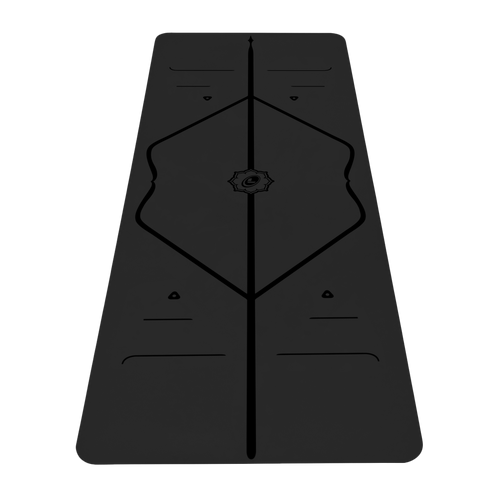
 Featured Yoga Mat: Liforme Classic Yoga Mat in Olive
Happy Baby Pose (Ananda Balasana)
Sanskrit Meaning: Ananda (Blissful) Bala (Baby) Asana (Pose)
Pose Type: Supine
Why This Pose: This hip opener is often done at the end of a yoga session.
Step-by-Step Instructions:
1. Lie on your back.
2. Hug your knees into your chest.
3. Separate your knees toward your armpits.
4. Stack your ankles over your knees with your shins perpendicular to the floor.
5. Hold the outer edges of your feet and draw them gently down.
6. Keep your sacrum on the floor.
7. Take five to ten deep breaths.

Corpse Pose (Savasana)
Sanskrit Meaning: Sava (Corpse) Asana (Pose)
Pose Type: Supine
Why This Pose: Final relaxation is key.
Step-by-Step Instructions:
1. Lie on your back with your arms alongside your body.
2. Turn your palm to face the ceiling.
3. Let your feet fall out to either side.
4. Close your eyes.
5. Breath naturally for five to ten minutes.
Tips for Building a Beginner Yoga Practice
1. Get Stacking
You may have noticed that there’s a lot of talk about stacking body parts in the above instructions. This is part of the rudiments of yoga alignment, because your body is most stable when joints are stacked. Focusing your attention on stacking helps improve body awareness and prepare you for more advanced poses.
2. Move with Your Breath
In yoga, you generally lift on inhalations of breath and lower on exhalations. For instance, from Mountain Pose, you inhale to lift your arms overhead and exhale to forward fold over your legs. You can apply this principle in many other poses.
3. Use Props
Props are intended to help maintain proper alignment. It’s often possible to do a version of a pose without the prop, but it’s more beneficial to do it with the prop. Props help you progress safely.
4. Be Consistent
Yoga’s benefits come from consistent practice over time. It’s better to do a little yoga every day or every other day than a longer session irregularly.
Common Mistakes Beginners Make (and How to Avoid Them)
1. Don’t Compare Yourself to Others
It’s natural to take a glance around the room to see what everyone is doing, especially when poses are unfamiliar. That’s fine, but avoid comparisons. You have no idea what anyone else’s backstory is, and the only person you need to worry about is yourself.
2. Don’t Skip Savasana
Especially if you’re practicing at home, it can be tempting to skedaddle before final relaxation. Make this a non-negotiable. Integration is a crucial part of yoga.
3. Don’t Force It
Never push yourself into any position. You can stretch a muscle, but don’t overdo it. Yoga is not a ‘no pain, no gain’ situation!
Start Where You Are
People often put off starting yoga because they think they need to be fitter, more flexible, or have more time. Yoga doesn’t require any of these. The only thing you have to do is come to your mat regularly. Read our Complete Beginners Guide to get started today.
FAQs About Yoga Poses for Beginners
What are the best yoga poses for complete beginners?
The best poses for beginners introduce yoga forms while strengthening and stretching the whole body.
Which yoga pose is easiest for beginners?
It really depends on you, but the goal of yoga is not to do the easiest pose. You get more benefits from a pose that’s a little bit challenging, and you also want to do a wide variety of poses.
How long should a beginner hold each yoga pose?
Aim for three to five breaths.
How often should a beginner practice yoga?
The more consistently you practice, the better. Try to start with two or three times a week.
Do I need to be flexible to start yoga?
Not at all! Yoga improves your flexibility no matter where you start. There are always variations and props to make every pose accessible.
What props do I need as a beginner?
So glad you asked! A yoga mat is a must, of course. Yoga blocks and straps are very handy, as well as something to sit on, like a blanket or bolster. You can improvise some of these with belts, towels, and cushions. After the mat, get some blocks.
Is it better to take a class or practice at home as a beginner?
Yoga classes really help beginners get off on the right foot. It’s important to get feedback and detailed alignment instructions to establish good habits. A series of classes for beginners is a great way to learn from an experienced teacher and ensure consistency.