€ EUR
€ EUR

Sukhasana is, by definition, any comfortable cross-legged sitting position, but it’s not always easy to find comfort in this pose, especially if your hips are feeling tight. While regular practice is key to opening your body, props can also help you find more ease when sitting cross-legged.
How to Use Props for a Comfortable Easy Pose
If your knees are above your hips when you sit cross-legged, use props under your sit bones to lift your pelvis.
- Place a block (or two), a bolster, or any number of folded blankets under your sit bones to lift your pelvis.
- Add height until your knees are below your hips.
- Raising your seat will allow you to elongate your spine instead of rounding it, relieve hip pain, and sit comfortably for longer.
Step-by-Step Instructions for Sukhasana
- Prepare your sitting area. If using props, place them under your sit bones so your hips are slightly higher than your knees.
- Sit cross-legged with your seat on the prop and your knees on the floor.
- Any position of your legs is acceptable. Here are a few possibilities:
- Tuck each foot under the opposite shin.
- Bring one heel in towards your groin and align the other heel in front of it, which widens your knees.
- Bring one foot on top of the opposite calf.
- Stack your shoulders over your hips.
- Keep your neck long, your gaze level, and your shoulders sliding down your back.
- Take your hands into Anjali mudra, or rest your palms on your thighs, facing up for receptivity or down for grounding.
🧘 Tip from a Yogi
Before your yoga class begins, make a trip to the prop corner to make sure you have everything you need. Get two blocks and a blanket at a minimum. If you have tight hips, get another blanket so you can stack them. If your studio has bolsters or zafus (round meditation cushions), these are also really nice options for Sukhasana. If you are practicing at home, use folded blankets, throw pillows, or sofa cushions.
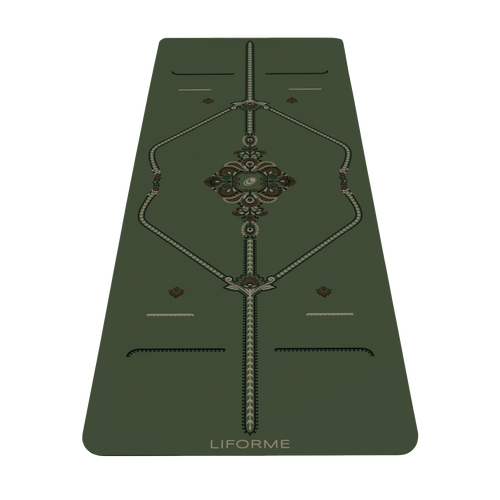
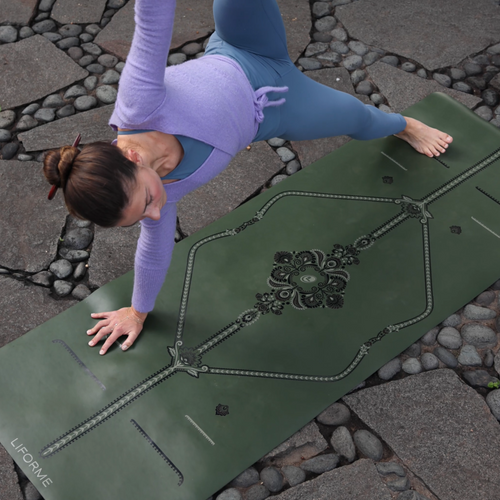
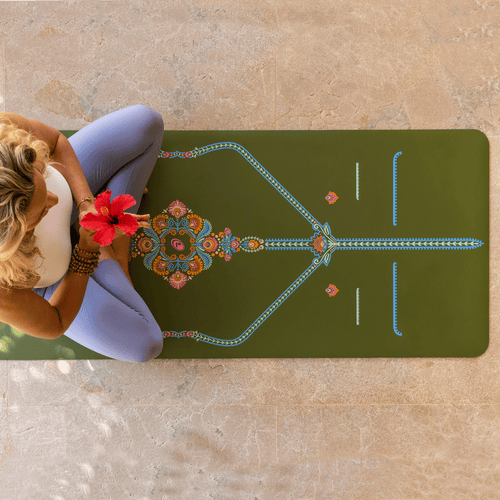
 Featured Yoga Mat: Mindful Garden in Olive
Easy Pose Basics
Sanskrit Meaning: Sukha (Comfort) Asana (Pose)
Yoga Level: Beginner
Pose Type: Seated
Props: Blanket, bolster, blocks
Benefits of Sukhasana
- Opens your hips and groins
- Improves posture and spinal alignment
- Comfortable breathwork and meditation position
Beginner Tips for Sukhasana
- Almost everyone benefits from using a prop under their seat in Sukhasana.
- The goal of this pose is comfort. Find the setup that works for you.
Sukhasana Variations
 Featured Yoga Mat: Liforme Classic Yoga Mat in Grey
Bound Angle (Baddha Konasana)
Press the soles of your feet together and open your knees.
 Featured Yoga Mat: Liforme Classic Yoga Mat in Pink
Half Lotus (Ardha Padmasana)
Move one foot into the opposite hip crease.
Why We Practice Easy Pose
A comfortable, cross-legged position for meditation, breathwork, or a moment of rest is a cornerstone of yoga asana practice. What if it doesn’t feel “easy” or “comfortable” at all, though?
Props can make all the difference. Once your knees are below your hips, you’ll naturally sit tall, breathe steadily, and find the ease the pose is named for.
Sukhasana FAQs
Why do my hips and knees hurt during Easy Pose?
Most of the time, it’s because your hips are tight or your knees are sitting higher than your hips, which can create strain. Sitting on a prop to lift your seat usually makes a big difference.
Do I need props for Easy Pose?
While you don’t necessarily need them, many people find Sukhasana genuinely becomes “easy” once the hips are lifted with a folded blanket, bolster, or block.
How long should I stay in Sukhasana?
It depends on what you’re using it for. You might sit for a few slow breaths at the start of practise, or for several minutes during breathwork or meditation. Comfort is the priority, so use props and change position whenever you need to.
What are the benefits of Sukhasana?
It helps open your hips and groins and improves posture. With the appropriate props, it can also be a comfortable position for breathwork and meditation.