€ EUR
€ EUR

When neck pain is a real pain in the neck, gentle yoga poses can often provide relief by stretching tight muscles and improving the mobility and strength of your neck, shoulders, and upper back.
You’ll get the best results by incorporating neck-focused poses into your consistent, well-rounded yoga practice. If you have a recent injury or underlying condition like arthritis, be sure to speak to your healthcare team before trying any new exercises.
How Can Yoga Help with Neck Pain?
There are many causes of neck pain, including tension, poor posture, and muscle strain. Since your neck is part of your spine, yoga’s whole-body approach is often an effective way to treat and prevent neck pain. Paying special attention to alignment and connecting movement with breath will yield the best results. Yoga helps by:
-
Releasing tight muscles in the neck and upper back
-
Strengthening cervical spine support muscles
-
Increasing spinal mobility
Precautions
-
Don’t force any position.
-
Pay attention to your body’s pain signals.
-
Stay within a comfortable range of motion.
-
Be patient.
-
Consult a doctor if you have a severe neck issue, such as a pinched nerve or arthritis.
The 10 Best Yoga Poses to Relieve Neck Pain
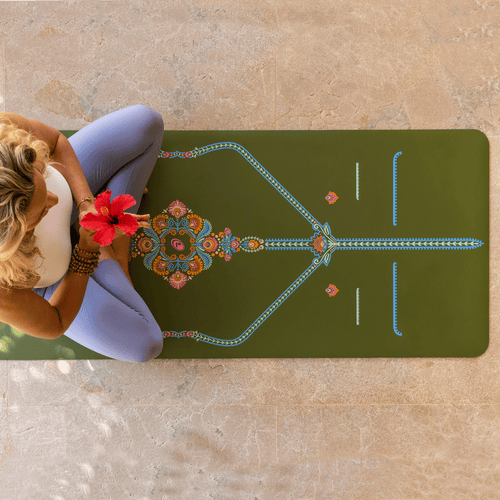
 Featured Yoga Mat: Tropical Paradise
Seated Neck Stretch 1
Yoga Level: Beginner
Pose Type: Seated
Why This Pose: A gentle stretch to promote mobility
Step-by-Step Instructions:
1. Begin in a comfortable seated position like Easy Pose (Sukhasana) or Hero Pose (Virasana) with a block under the sitbones.
2. Relax your shoulders away from your ears.
3. Turn your head so that your chin is over your left shoulder.
4. Drop your chin toward your chest and trace the line of your collarbone to bring your chin to point at your right shoulder.
5. Go back and forth several times.

Seated Neck Stretch 2
Yoga Level: Beginner
Pose Type: Seated
Why This Pose: Applying light pressure deepens the stretch
Step-by-Step Instructions:
1. Begin seated in Easy Pose or Hero Pose.
2. Tilt your left ear toward your left shoulder.
3. Bring the palm of your left hand to the right side of your head and apply gentle pressure if there is no pain.
4. After several breaths, come back to neutral and repeat on the other side.

Seated Eagle Arms (Garudasana)
Sanskrit Meaning: Garuda (Eagle) Asana (Pose)
Yoga Level: Beginner
Pose Type: Seated
Why This Pose: Expands your upper back
Step-by-Step Instructions:
1. Begin seated in Easy Pose or Hero Pose.
2. Extend your arm in front of you parallel to the floor.
3. Cross your arms at the elbow with your right arm on top.
4. Bend both elbows and bring your palms to touch.
5. Keep your upper arms parallel to the floor.
6. Take at least five breaths, then release and do the other side.
 Featured Yoga Mat: Black & Gold
Seated Easy Twist (Parivrtta Sukhasana)
Sanskrit Meaning: Parivritta (Revolved) Sukha (Easy) Asana (Pose)
Yoga Level: Beginner
Pose Type: Seated
Why This Pose: Introduces gentle rotation to the whole spine.
Step-by-Step Instructions:
1. Begin seated in Easy Pose (Sukhasana). Sit on a block or bolster if your knees are above your hips.
2. Inhale and bring your arms overhead.
3. Exhale and twist to the right side, bringing your left hand to your right knee and your right hand to the floor behind your back.
4. Let your head follow the rotation of your spine.
5. After several breaths, return to center and do the other side.
 Featured Yoga Mat: Liforme Classic Yoga Mat in Blue
Child’s Pose (Balasana)
Sanskrit Meaning: Bala (Child) Asana (Pose)
Yoga Level: Beginner
Pose Type: Kneeling
Why This Pose: A good stretch for your neck and upper back.
Step-by-Step Instructions:
1. Begin on your hands and knees.
2. Take your knees wide and bring your big toes to touch.
3. Sink your seat to your heels and bring your forehead to the floor.
4. Come onto your fingertips and stretch your arms forward.
5. Stay here for five to ten breaths.
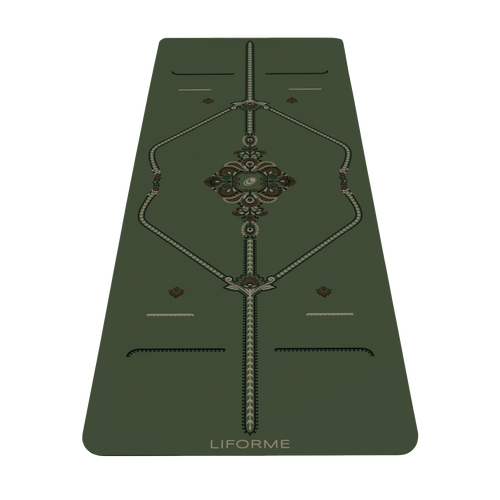
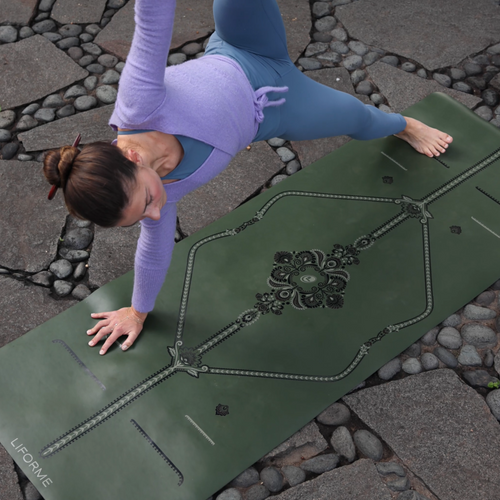
 Featured Yoga Mat: Paisley Passion in Olive
Child’s Pose (Balasana) with Thread the Needle
Sanskrit Meaning: Bala (Child) Asana (Pose)
Yoga Level: Beginner
Pose Type: Kneeling
Why This Pose: A release for the levator scapula muscle on the sides of the neck.
Step-by-Step Instructions:
1. From Child’s Pose, lift up slightly and thread your right arm under your left armpit, coming onto your right shoulder and extending your right arm to the left.
2. After several breaths, come back to center and repeat on the other side.
 Featured Yoga Mat: Blossoming Lotus in Purple
Cat-Cow Stretches (Marjaryasana-Bitilasana)
Sanskrit Meaning: Marjari (Cat) Asana (Pose) Bitila (Cow) Asana (Pose)
Yoga Level: Beginner
Pose Type: Kneeling
Why This Pose: Your neck is part of your spine, and this stretch encourages spinal mobility.
Step-by-Step Instructions:
1. Begin on your hands and knees with your shoulders over your wrists and your hips over your knees.
2. Initiate movement from your tailbone and keep your navel lightly drawn in.
3. On an inhalation, lift your tail, drop your belly, and lift your head.
4. On the next exhalation, tuck your tail, dome your spine, and release your head.
5. Continue this sequence of movements on each inhale and exhale for several rounds of breath.
 Featured Yoga Mat: Liforme Classic Yoga Mat in Grey
Sphinx (Salamba Bhujangasana)
Sanskrit Meaning: Salamba (Supported) Bhujanga (Cobra) Asana (Pose)
Yoga Level: Beginner
Pose Type: Prone
Why This Pose: A gentle, supported backbend that lengthens your neck.
Step-by-Step Instructions:
1. Begin lying on your stomach.
2. Come onto your forearms with your elbows under your shoulders.
3. Press into your forearms to create space between your shoulders and ears.
4. Stay for three to five breaths.
 Featured Yoga Mat: Cosmic Moon in Black
Standing Forward Fold (Uttanasana)
Sanskrit Meaning: Uttana (Intense Stretch) Asana (Pose)
Yoga Level: Beginner
Pose Type: Standing
Why This Pose: Let gravity work to release your neck.
Step-by-Step Instructions:
1. Stand with your feet hip-distance apart.
2. Rotate your pelvis over your femurs to come into a forward fold.
3. Bend your knees as much as necessary to release your upper body over your legs.
4. Let your arms and your head hang heavy.
5. Take at least five breaths in this position.
 Featured Yoga Mat: Liforme X You Custom Yoga Mat
Supine Spinal Twist (Supta Matsyendrasana)
Sanskrit Meaning: Supta (Reclined) Matsyendra (Lord of Fishes) Asana (Pose)
Yoga Level: Beginner
Pose Type: Supine
Why This Pose: Improved neck mobility.
Step-by-Step Instructions:
1. Lie on your back with your legs extended.
2. Hug your right knee into your chest.
3. Take your right knee across your body to the outside of your left hip.
4. Keep both shoulders grounded. Take a block or bolster under your right knee if it doesn’t come to the floor.
5. Extend both arms to a T position.
6. Turn your head to take your gaze over your right shoulder.
7. After at least five breaths, come back to center and do the other side.
Tips for Practice
Relax Your Shoulders
In many yoga poses, the shoulders have a habit of creeping up toward the ears. Remind yourself frequently to relax your shoulders and slide your shoulder blades down your back.
Move with Attention
Take all neck movements slowly, avoiding cranking your neck in any direction.
Stretch Frequently
Many of these seated stretches can be done throughout your workday to release tension. A consistent practice over time yields the best results.
Also, make sure your workstation is set up as ergonomically as possible.
Yoga Poses to Avoid If You Have Neck Pain
If your neck is bothering you, avoid poses that:
-
Put pressure on your head, like Headstand (Sirsasana).
-
Compress your neck, including Shoulderstand (Salamba Sarvangasana) and Plow Pose (Halasana).
-
Bring your cervical spine into deep extension, such as Camel Pose (Ustrasana) and Fish Pose (Matsyasana).
Go Gently
Yoga is most effective for neck pain when you stretch gently and consistently. Once you feel better, incorporate poses that improve your mobility, posture, and strength to prevent your pain from coming back. When in doubt, consult a health care professional before starting.
FAQs About Yoga for Neck Pain
Can yoga help with neck pain?
Yoga is great for neck pain associated with things like stiffness, tension, or a weird night’s sleep. If you have chronic pain or an injury, talk to your doctor before trying yoga.
How often should I practice yoga to alleviate neck pain?
For general relief of tension and prevention, aim for three times a week. If you have particularly tight shoulders and upper back, doing a few stretches daily can really make a difference.
Which yoga pose is best for a pinched nerve in the neck?
This is one of those situations in which talking to a doctor or physical therapist is crucial.
Can I do these poses if I have arthritis in my neck?
In many cases, gentle movement is recommended for arthritis, but speak to your healthcare team first to make sure it’s appropriate for you.