€ EUR
€ EUR

Yoga is a practice that’s accessible to people of any physical ability. It’s also a practice that grows with you as you gain strength, mobility, and experience. To keep your body challenged and your attention engaged, more advanced yoga poses begin to require combinations of balance, flexibility, and strength to create ever more complex shapes.
Advanced yoga poses include inversions, arm balances, deep backbends, and bendy twists and binds in standing and seated positions. The poses themselves are incidental to the processes that get you there, which constitute your practice. There’s always a new way to grow, which keeps things interesting and fun.
Before You Start
- Before you start working on advanced poses, warm up thoroughly.
- When practicing at home, don’t leave new explorations to the end of your session when you are tired.
- Use props like blocks, straps, and the wall to ensure that you’re not sacrificing your alignment as you progress.
- Check your local studio for workshops on advanced poses like inversions and arm balances to get expert advice as you begin.
The 21 Best Advanced Yoga Poses to Try
Inversions
Yoga inversions are poses in which your head is below your heart. In advanced inversions, your feet also leave the floor, which requires core strength and good balance.
 Featured Yoga Mat: Cosmic Moon XL in Dusk Blue
Forearm Stand (Pincha Mayurasana)
Sanskrit Meaning: Pincha (Feather) Mayura (Peacock) Asana (Pose)
Pose Type: Inversion
Why This Pose: A good stepping stone between Headstand and Handstand.
Step-by-Step Instructions:
1. Come into Dolphin Pose with your forearms parallel.
2. Walk your feet in as close to your elbows as possible.
3. Lift one leg, stacking your hips over your shoulders.
4. Take your weight into your forearms and float your other foot away from the floor
5. Bring both legs to meet perpendicular to the floor.
6. To come out, lower one leg at a time.

Scorpion Pose (Vrschikasana)
Sanskrit Meaning: Vrschika (Scorpion) Asana (Pose)
Pose Type: Inversion
Why This Pose: Once Forearm Stand becomes comfortable, adding a deep backbend is a new challenge.
Step-by-Step Instructions:
1. Come into Forearm Stand.
2. Lift your head and take your pelvis toward the back of your mat.
3. Bend your knees as you move into deep spinal extension.
4. Lower your feet toward the crown of your head.
5. To come out, release your legs one at a time.
 Featured Yoga Mat: Cosmic Moon Yoga Pad in Dusk Blue
Handstand (Adho Mukha Vrksasana)
Sanskrit Meaning: Adho (Downward) Mukha (Facing) Vrksa (Tree) Asana (Pose)
Pose Type: Inversion
Why This Pose: Balancing on your hands requires advanced strength, focus, and body awareness.
Step-by-Step Instructions:
1. Begin in Downward Facing Dog.
2. Walk your feet in so that your pelvis moves closer to being over your shoulder.
3. Lift one leg into a Down Dog Split.
4. Bend your standing leg and lightly swing your lifted leg to transfer your weight into your hands and kick up with control.
5. Bring both legs to perpendicular.
6. To come out, lower one leg at a time.
 Featured Yoga Mat: Liforme X You Personalized Yoga Mat
Handstand Variations
Pose Type: Inversion
Why This Pose: Once you are confident balancing in Handstand, there are any number of leg variations you can play with.
Step-by-Step Instructions:
1. From Handstand, take your legs wide apart.
2. Keeping your knees wide, bring your big toes to touch.
Arm Balances
Though arm balances seem like feats of strength, body awareness and finding your center of gravity are just as important. Advanced arm balances often bring flexibility into the mix.
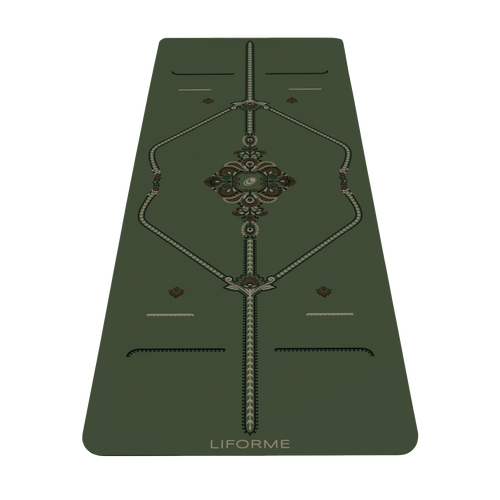
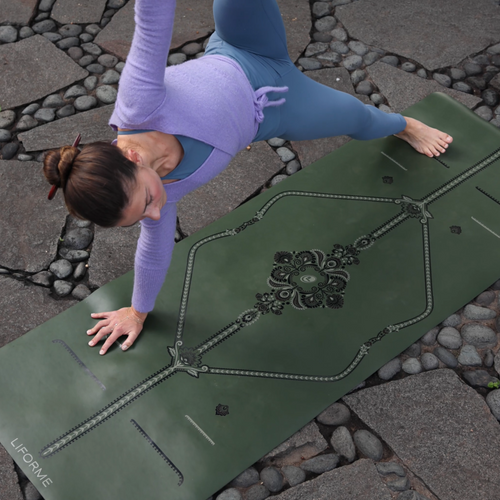
 Featured Yoga Mat: Liforme Classic Yoga Mat in Deep Forest Green
Crane Pose (Bakasana)
Sanskrit Meaning: Baka (Crane) Asana (Pose)
Pose Type: Arm Balance
Why This Pose: A natural follow-up to Crow Pose (Kakasana)
Step-by-Step Instructions:
1. Come into Crow Pose.
2. Engage your core and press your knees into the backs of your arms so they aren’t resting on the arms as much.
3. Begin to straighten your arms and lean your body forward a bit more for balance.
 Featured Yoga Mat: Radiant Sun in Yellow
Flying Crow (Eka Pada Galavasana)
Sanskrit Meaning: Eka (One) Pada (Foot) Galava (Sage) Asana (Pose)
Also Known As: Flying Pigeon
Pose Type: Arm Balance
Why This Pose: A good pose in which to practice lifting one leg out behind you.
Step-by-Step Instructions:
1. Begin in Chair Pose (Utkatasana).
2. Lift your right leg and place your right ankle on top of your left thigh with your right knee pointing to the right.
3. Forward bend to bring your palms to the floor.
4. Hook your right foot around your upper left arm.
5. Bring your weight into your hands and tilt forward to float your left foot off the floor.
6. Keep your head up as you extend your left leg straight behind you.
7. Reverse the process to exit the pose and repeat on the other side.
 Featured Yoga Mat: XL Mountain Mat
Grasshopper Pose
Pose Type: Arm Balance
Why This Pose: Flying Crow with a twist
Step-by-Step Instructions:
1. Begin in Chair Pose (Utkatasana).
2. Lift your right leg and place your right ankle on top of your left thigh with your right knee pointing to the right.
3. Take your hands to Anjali mudra at your sternum.
4. Twist to the left, bringing your upper right arm to the sole of your right foot.
5. Bend your left leg to come into a squat and plant your palms on the floor outside your left thigh.
6. Lean forward to shift your weight into your hands.
7. Your right foot comes to stand on your upper right arm, and your left foot floats off the floor.
8. Extend your left leg to the right.
9. Release your feet to the floor and repeat the pose on the other side.

Eight-Angle Pose (Astavakrasana)
Sanskrit Meaning: Asta (Eight) Vakra (Crooked) Asana (Pose)
Pose Type: Arm Balance
Why This Pose: This Chaturanga arms pose may be accessible if you can do Side Crow.
Step-by-Step Instructions:
1. From Staff Pose (Dandasana), bring your right leg over your upper right arm with the knee as close to your shoulder as possible.
2. Press into your palm to lift your butt off the floor.
3. Cross your left leg over the right one, hooking the ankles together.
4. Bring your torso forward as you extend both legs out to the right.
5. Return to upright and lower your butt to the floor.
6. Repeat on the other side.

One-Legged Pose Dedicated to the Sage Koundinya (Eka Pada Koudinyasana I)
Sanskrit Meaning: Eka (One) Pada (Leg) Koundinya (Sage) Asana (Pose)
Pose Type: Arm Balance
Why This Pose: Another pose that builds on Side Crow
Step-by-Step Instructions:
1. Begin in Side Crow with your right leg on top.
2. Straighten your left leg and extend it to the left.
3. At the same time, straighten your right leg and extend it to the back of the room.
4. Keep your shoulders level with your elbows.
5. Reverse the process to come out and repeat on the other side.
 Featured Yoga Mat: Liforme Class Yoga Mat in Aqua Teal
One-Legged Pose Dedicated to the Sage Koundinya (Eka Pada Eka Pada Koudinyasana II
Sanskrit Meaning: Eka (One) Pada (Leg) Koundinya (Sage) Asana (Pose)
Also Known As: Hurdler’s Pose
Pose Type: Arm Balance
Why This Pose: Same Chaturanga arms, different leg configuration.
Step-by-Step Instructions:
1. Begin in Lizard Pose with your right leg forward and your arms straight.
2. Bend your elbows straight back to a Chaturanga position.
3. Bring your right upper arm under your right thigh and plant your palm outside your right foot.
4. Bring your left elbow under the left side of your pelvis.
5. Shift your weight forward to float both your feet off the floor.
6. Point your left foot to keep your leg engaged.
7. Extend your right leg to the right.
8. Lower both legs to come out.
9. Repeat on the other side.
 Featured Yoga Mat: Liforme Classic Yoga Mat in Grey
Peacock Pose (Mayurasana)
Sanskrit Meaning: Mayura (Peacock) Asana (Pose)
Pose Type: Arm Balance
Why This Pose: A completely different type of arm balance
Step-by-Step Instructions:
1. Begin on your hands and knees.
2. Turn your hands so your fingers face the back of your mat.
3. Lean forward and bend your elbows back.
4. Dome your spine and bring your abdomen onto your elbows.
5. Lean forward until you can lift your knees off the floor and extend your legs.
6. Release your feet to the floor to come out.
Backbends
Deep backbends keep your spine mobile and your heart open.
 Featured Yoga Mat: Liforme Classic Yoga Mat in Purple
King Pigeon (Rajakapotansana)
Sanskrit Meaning: Raja (King) Kapota (Pigeon) Asana (Pose)
Pose Type: Backbend
Why This Pose: A deeper version of Bow Pose (Dhanurasana)
Step-by-Step Instructions:
1. Begin in Cobra Pose with your elbows slightly bent.
2. Bend your knees, pointing your feet upward.
3. One at a time, reach your hands back to take hold of each knee.
4. Use the traction between your hands and knees to deepen your spinal extension.
5. Drop your head back toward your feet, perhaps bringing them to touch.
6. Release your hands one at a time to come out.
 Featured Yoga Mat: Mindful Garden in Purple
One Legged King Pigeon (Eka Pada Rajakapotansana)
Sanskrit Meaning: Eka (One) Pada (Foot) Raja (King) Kapota (Pigeon) Asana (Pose)
Pose Type: Backbend
Why This Pose: A combination of Pigeon Pose and a deep backbend.
Step-by-Step Instructions:
1. Begin in Pigeon prep with your left leg forward and torso upright.
2. Bend your right knee, pointing your foot upward.
3. Cross your left arm over your chest and reach your left hand behind your back to grab your right foot.
4. Take your right arm straight up, then bend at the elbow and take hold of your right foot behind your back. Once you have your foot with your right hand, let go with your left hand.
5. Reach your left arm straight up, then bend the elbow to reach behind your back and hold the right foot.
6. Once both hands are holding your right foot, use the resistance between them to deepen your spinal extension.
7. Drop your head back to meet your right foot.
8. Release your hold on your right foot to come out and repeat on the other side.
Twists
Many advanced poses also include upper body rotation, which challenges your balance.

Visvamitra’s Pose (Visvamitrasana)
Sanskrit Meaning: Visvamitra (Sage) Asana (Pose)
Pose Type: Twist
Why This Pose: Level up your Side Plank
Step-by-Step Instructions:
1. Begin in a Low Lunge with your right outside your right hand.
2. Bend your arms and tuck your right shoulder under your right thigh.
3. Rotate on the ball of your left foot to release your left heel to the floor, bringing your left foot parallel to the back edge of your mat.
4. Come onto the ball of your right foot and reach your left hand over to hold the right foot.
5. Take your weight into your right arm as you lift your right foot away from the floor with your left hand.
6. Extend your right leg toward the front of your mat, bring your left arm over your head, and rotate your chest toward the ceiling.
7. To come out, bend your right leg and lower it to the floor.
8. Repeat on the other side.
Standing Balances
The more elements in a standing balance, the more challenging it is. The poses require backbends, binds, and hamstring flexibility.
 Featured Yoga Mat: Liforme Classic Yoga Mat in Dusk Blue
Bird of Paradise (Svarga Dvijasana)
Sanskrit Meaning: Svarga (Heaven, Paradise) Dvija (Twice-Born) Asana (Pose)
Pose Type: Standing Balance
Why This Pose: Good practice combining multiple elements in a single pose
Step-by-Step Instructions:
1. Begin in Extended Side Angle Pose with your right leg forward.
2. Reach your right arm under your right thigh and your left arm behind your back.
3. Bring your hands to meet behind your back in a bind.
4. Step your left foot to the front of your mat, keeping the arms bound.
5. Come onto the ball of your right foot, bringing your weight into your left leg.
6. Lift your right foot away from the floor and stand up fully on your left leg.
7. Extend your right leg toward the ceiling.
8. Reverse the process to come out and repeat on the other side.

Standing Bow (Dandayamana Dhanurasana)
Sanskrit Meaning: Dandayamana (Balancing) Dhanu (Bow) Asana (Pose)
Pose Type: Standing Balance
Why This Pose: A variation on Dancer Pose that prioritizes extending the lifted leg over a deep backbend.
Step-by-Step Instructions:
1. Begin in Dancer Pose with your left leg lifted.
2. Extend your right arm forward.
3. Lean your torso forward for balance as you straighten your left leg as much as possible, pointing your toes upward.
4. Lower with control and repeat on the other side.

King Dancer (Natarajasana)
Sanskrit Meaning: Nataraja (King of the Dance) Asana (Pose)
Pose Type: Standing Balance
Why This Pose: Challenge yourself by combining a deep backbend and a balance.
Step-by-Step Instructions:
1. Begin in Dancer Pose with your left leg lifted.
2. Bring your left foot into the crook of your left elbow.
3. Reach your right arm over your chest to take hold of the left foot with your right hand.
4. Take your left arm up to the ceiling, then bend your left elbow to drop your left hand behind your back.
5. Grab your left foot with your left hand. Keep your left elbow pointing up.
6. Release your right hand, then take your right arm up to the ceiling, bend at the elbow, and reach behind your right shoulder for your left foot.
7. Once you have hold of the left foot with both hands, kick back and upwards to open your chest.
8. Release your left foot and lower with control.
9. Repeat on the other side.
Seated Poses
The stability of a seated position allows you to work on positions that require intense flexibility.
 Featured Yoga Mat: Tantalising Terracotta
Compass Pose (Parivrtta Surya Yantrasana)
Sanskrit Meaning: Parivrtta (Revolved) Surya (Sun) Yantra (Instrument) Asana (Pose)
Pose Type: Seated
Why This Pose: Work on opening your hamstrings and chest in a seated position
Step-by-Step Instructions:
1. Begin in Easy Pose (Sukhasna)
2. Lift your left leg over your left upper arm and place your left fingertips outside your hip.
3. Hold the outside edge of your left foot with your right hand.
4. Straighten your left leg and right arm, pull your shoulders and head through the opening between the left leg and right arm, and twist your chest to the right side.
5. Take your gaze upwards and activate your left toes.
6. To come out, bend your left leg and release.
7. Repeat on the other side.
 Featured Yoga Mat: Mindful Garden in Olive
Lotus Pose (Padmasana)
Sanskrit Meaning: Padma (Lotus) Asana (Pose)
Pose Type: Seated
Why This Pose: This iconic yoga posture requires open hips.
Step-by-Step Instructions:
1. Begin in Staff Pose (Dandasana).
2. Bend your right knee and bring the sole of your foot to the mat close to your right buttock.
3. Place your right foot into your left hip crease with the sole facing upward.
4. Repeat that process with the left foot, bringing it into the right hip crease.
5. Keep both feet active.
6. To come out, release the top foot first, using your hands if necessary.
 Featured Yoga Mat: Liforme Classic Yoga Mat in Blue
Monkey Pose (Hanumanasana)
Sanskrit Meaning: Hanuman (Hindu God) Asana (Pose)
Pose Type: Seated
Why This Pose: A full split that requires open hamstrings and attention to alignment
Step-by-Step Instructions:
1. Begin in Ardha Hanumanasana with your right foot forward.
2. With your right foot flexed, slide forward on your heel until you come to your full extension.
3. Keep both hips pointing facing the front of the mat.
4. If your right hamstring comes to the floor, take your arms overhead.
5. To come out, release your hand to the floor and draw your right foot in, returning to Ardha Hanumanasana before repeating on the other side.

Yoga Staff Pose (Yogadandasana)
Sanskrit Meaning: Yoga (Yoga) Danda (Staff) Asana (Pose)
Pose Type: Seated
Why This Pose: For those with very open hips
Step-by-Step Instructions:
1. Begin in a seated position with both knees bent and the soles of your feet on the floor.
2. Bring your right ankle onto your left thigh in a figure 4 position.
3. Twist your torso to the left, bringing your right triceps to the sole of your right foot.
4. Keeping your foot and arm in contact, open your right hip and release the front of your right thigh to the floor outside your right hip.
5. Tuck your right foot into your right armpit and reach your right down to hold your right knee.
6. Extend your left arm straight forward to rest on your left knee.
Benefits of Practicing Advanced Yoga Poses
- Continued improvement in strength, flexibility, balance, and mobility
- Keep your practice challenging and engaging
- Teaches resiliency and growth mindset
- Fun!
Tips for Progression
Take it Step by Step
Every advanced pose is built upon foundational postures. Whenever a pose becomes easy or boring, you’ll know it’s time to begin working on a more advanced variation.
Play with Balance
Arm balances and inversions depend on having a sense of where your centre of gravity is. You discover this through practice and experimentation.
Do Your Homework
It’s often difficult to make progress if you only practice a pose occasionally in class. If you have poses that you really want to do, work on them at home after warming up safely.
Safety and Accessibility
Advanced poses come with time and practice. Don’t be in a hurry and never force your body into any position.
- Warm up your wrists, shoulders, hips, and hamstrings before attempting advanced poses
- Avoid inversions if you have uncontrolled blood pressure, glaucoma, or neck issues
- Don’t force backbends
- Practice with a teacher when first learning inversions and arm balances
- Use a wall, blocks, straps, and spotters when needed
“Practice and All is Coming”
Let this famous quote from Ashtanga Yoga founder Pattabhi Jois be your guide when approaching more advanced yoga poses. When you consistently show up on your mat, you make progress. Achieving any particular pose is just a stepping stone on the yogic path.
FAQs About Advanced Yoga Poses
What counts as an “advanced yoga pose”?
These terms can be tricky because there are no official guidelines, but generally poses that require a combination of strength, flexibility, and balance, like inversions, arm balances, and standing balances, are considered advanced.
How often should I practice advanced yoga poses to make progress?
It really helps to practice difficult poses regularly, daily if possible.
What are the best advanced yoga poses to start with if I’m moving up from intermediate?
Try building more complexity into poses that you already practice easily. For instance, if you can do Crow, work on straightening your arms into Crane. If you can do Side Crow, try extending your legs. More advanced poses will flow naturally from poses in your repertoire.
Do I need to be flexible to do advanced yoga poses, or is strength more important?
It depends on the pose! Some, like Monkey Pose, are more about flexibility, while others are more about strength. If you practice a wide range of poses, you’ll build both your strength and flexibility, and more advanced poses will become accessible.
How do I practice inversions like Handstand or Forearm Balance more safely?
Using a wall is a good way to avoid falling. Advanced inversions require control. If you’re kicking up, it’s more likely that you will lose balance and topple over. Practice lifting up incrementally so you’re in control throughout.
Are advanced yoga poses safe to practice at home?
For the most part, yes. In fact, the best way to make progress is to practice your peak poses regularly at home. Part of advancing in yoga is getting to know your own body and its limitations. If it feels risky to practice a pose on your own, you might not be ready for that posture.