€ EUR
€ EUR

If you need a foolproof way to release tension in your shoulders, upper back, and neck, Thread the Needle (Urdhva Mukha Pasasana) is the pose for you! This upper body twist gently stretches your back and shoulder girdle. It’s very beginner-friendly and is often a part of yoga warm-up and cool-down sequences. Let’s give it a go!
Step-by-Step Instructions for Thread the Needle Stretch
- Begin in a tabletop position with your shoulders over your wrists and your hips over your knees.
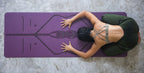
- On an exhale, thread your right arm underneath your left arm, palm facing up.
- Keep sliding your right hand to the left until your right shoulder and right temple come to rest on the floor.
- Extend your left arm forward and come onto your left fingertips.
- After three to five breaths, bring your left palm back under your left shoulder and press down to lift your head and shoulder off the floor.
- Return to hands and knees position and switch sides.
🧘 Tip from a Yogi
There are any number of options for your upper arm, so pick one that feels comfortably edgy to deepen your stretch. Try extending your arm in front of you, laying your upper palm on top of your lower palm, or wrapping your upper arm behind your back.
Thread the Needle Pose Basics
Sanskrit Meaning: Urdhva (Upward) Mukha (Facing) Pasa (Noose) Asana (Pose)
Yoga Level: Beginner
Pose Type: Kneeling
Pose Category: Twist
Benefits of Thread the Needle Pose
- Relieves tension in your shoulders and upper back
- Improves spinal mobility
- Calms the nervous system and supports stress relief
- Stretches your shoulder blades and trapezius muscles
Key Alignment Cues for Thread the Needle Pose
1. Stack Hips Over Knees
Keep the twist in your upper body by making sure your hips stay stacked over your knees.
2. Reach Your Arm
Extend your threaded arm as far as possible to really rotate your spine.
3. Relax Your Neck
Let your head be heavy on the mat to prevent tension in your cervical spine.
Urdhva Mukha Pasasana Variations and Modifications
 Thread the Needle in Child’s Pose (Parsva Balasana)
You can also take the same upper body twist from Child’s Pose.
 Thread the Needle with a Bind
Instead of taking the upper arm forward, wrap it around your back, aiming to tuck your fingertips into the opposite hip crease.
Thread the Needle with Extended Leg
When your right shoulder is on the floor, extend your left leg out to the left side. Use the traction from your extended leg to deepen your twist.
Preparatory Poses
 Cat-Cow Stretch (Marjaryasana-Bitilasana)
Warm up your spine and shoulders with gentle movement.
 Puppy Pose (Uttana Shishosana)
Another way to stretch your back and shoulders in a kneeling position.
Counter Poses
 Child’s Pose (Balasana)
Ground your body and release your spine.
 Downward-Facing Dog (Adho Mukha Svanasana)
Stretch your legs and anchor your shoulder blades on your back.
Why We Practise Thread the Needle Stretch
Sometimes you don’t realize how much tension you’re carrying in your shoulders and neck until you release them with this pose. That’s why we like to include Thread the Needle in every yoga practice warm-up, where it naturally flows from Cat-Cow stretching.
Thread the Needle Pose FAQs
What muscles does Thread the Needle Stretch target?
This stretch targets your chest, upper arms, neck, shoulders, and back.
Can beginners do Thread the Needle Stretch?
Yes, they can! Thread the Needle is very appropriate for most beginners.
Should I feel this in my lower back?
Ideally, the stretch is happening in the upper back. Make sure your lower body stays centred and isn’t getting too involved.
Is Thread the Needle pose safe for people with shoulder injuries?
It’s very much dependent on the type of injury. Always speak to your health care provider about what kinds of movement to avoid when you have an injury.