£ GBP
£ GBP

Tennis, anyone?
Racket sports are a fantastic way to stay active, socialize, and have fun while wiping the court with your opponent. Tennis is a particularly good sport for healthy aging, and if you are an avid player, you want to do everything possible to prevent injuries so you don’t miss any court time. That’s where yoga comes in.
Yoga’s focus on strength, flexibility, and balance helps you stay strong and limber, keeping your serves lethal and your volleys explosive. We’re focusing on yoga poses that stretch your hamstrings, improve hip and shoulder mobility, stabilize the core, and strengthen your wrists and forearms.
Include these in a consistent, well-rounded yoga routine, and your doubles partner will thank you!
The 10 Best Yoga Poses for Tennis Players
 Featured Yoga Mat: Liforme Classic Yoga Mat in Purple
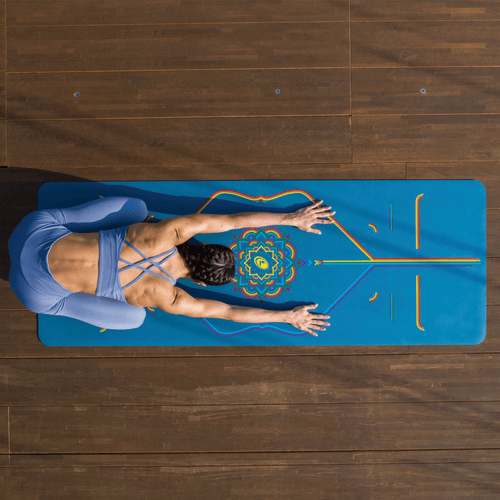
Puppy Pose (Uttana Shishosana)
Sanskrit Meaning: Uttana (Intense) Shisho (Puppy) Asana (Pose)
Yoga Level: Beginner
Pose Type: Kneeling
Why This Pose: Stretches your back and shoulders
Step-by-Step Instructions:
1. Begin on your hands and knees.
2. Keeping your hips stacked over your knees, walk your hands forward until your forehead, chest, or chin meets the mat.
3. Keep your arms active.
4. Take five to ten deep breaths.
 Featured Yoga Mat: Radiant Sun in Blue
Downward Facing Dog (Adho Mukha Svanasana)
Sanskrit Meaning: Adho (Down) Mukha (Face) Svana (Dog) Asana (Pose)
Yoga Level: Beginner
Pose Type: Standing
Why This Pose: Stretches your hamstrings and wrists
Step-by-Step Instructions:
1. Begin on your hands and knees.
2. Curl your toes under and press into your palms to straighten your legs and lift your seat toward the ceiling.
3. Pedal your feet and move your shoulders away from your ears.
4. Stay here for five to ten breaths.
 Featured Yoga Mat: Cosmic Moon in Dusk Blue
Plank (Phalakasana)
Sanskrit Meaning: Phalaka (Plank) Asana (Pose)
Yoga Level: Beginner
Pose Type: Arm Support
Why This Pose: Strengthen your core and wrists
Step-by-Step Instructions:
1. Begin on your hands and knees with your shoulder over your wrists.
2. Straighten your legs one at a time, coming onto the balls of your feet.
3. Maintain a straight line from the crown of your head to your heels.
4. Lower your knees to the floor if necessary.
5. Hold for ten or more breaths.

Forearm Side Plank (Vasisthasana)
Sanskrit Meaning: Vasistha (Ancient poet and sage) Asana (Pose)
Yoga Level: Intermediate
Pose Type: Arm Support
Why This Pose: Strengthens your shoulders and obliques
Step-by-Step Instructions:
1. Lie on your right side with your right shoulder over your elbow and your forearm parallel to the front side of your mat.
2. Press into your right forearm and palm to lift your side body off the floor.
3. Flex your feet.
4. For an extra challenge, lift your left leg any amount.
5. After five to ten breaths, lower and switch sides.
 Featured Yoga Mats: Liforme Classic Yoga Mat in Grey and Yoga Pad in Red
Revolved Crescent Lunge with Quad Stretch (Parivrtta Anjaneyasana)
Sanskrit Meaning: Parivrtta (Revolved) Anjani (Hindu goddess) Asana (Pose)
Yoga Level: Intermediate
Pose Type: Kneeling
Why This Pose: Open your hips and quads
Step-by-Step Instructions:
1. Begin in a low lunge with your hands on the mat and your right foot forward.
2. Lower your left knee to the floor. Take a pad under the knee for extra comfort.
3. Take your hands to your hips and deepen the bend in your right knee any amount.
4. Bend your left knee and bring the heel towards your glute.
5. Reach back for your left foot with your right hand to pull your heel in more.
6. Take several breaths, then release and switch sides.
 Featured Yoga Mat: Liforme Classic Yoga Mat in Dusk Blue
Half Monkey Pose (Ardha Hanumanasana)
Sanskrit Meaning: Ardha (Half) Hanuman (Monkey god) Asana (Pose)
Yoga Level: Intermediate
Pose Type: Kneeling
Why This Pose: Hamstring stretch
Step-by-Step Instructions:
1. Begin in a low lunge with your hands on the mat and your right foot forward.
2. Lower your left knee to the floor. Take a pad under the knee for extra comfort.
3. Take your hips back as you straighten your right leg, coming up on your right heel.
4. Take blocks under your hands for support.
5. Take several breaths to forward bend over your right leg before switching sides.
 Featured Yoga Mat: White Magic
Side Lunge Variation (Skandasana)
Sanskrit Meaning: Skanda (Hindu war god) Asana (Pose)
Yoga Level: Beginner
Pose Type: Standing
Why This Pose: Stretches the adductors
Step-by-Step Instructions:
1. Begin in a wide-legged stance facing the long side of your mat.
2. Make sure your feet are parallel.
4. Bend into your right knee while keeping your left leg straight.
5. Take your arms to the right.
6. Come back to the center and do the pose with your left knee bent.
7. Move back and forth from one side to the other several times.
 Featured Yoga Mat: Tropical Paradise
Triangle Pose with Arm Circles (Trikonasana)
Sanskrit Meaning: Tri (Three) Kona (Angle) Asana (Pose)
Yoga Level: Beginner
Pose Type: Standing
Why This Pose: Stretches your legs and improves shoulder mobility
Step-by-Step Instructions:
1. Begin in a wide-legged stance facing the long side of your mat with your feet parallel.
2. Turn your right foot 45 degrees to point your toes at the front of your mat.
3. Reach your right arm forward and then release your right hand to your right shin, ankle, or a block.
4. Open your chest to the left and take your gaze and your left arm toward the ceiling.
5. Take your left arm forward and around, making big arm circles.
6. After several breaths, reverse the direction of your arm circles.
7. Come back to the center and repeat on the other side.
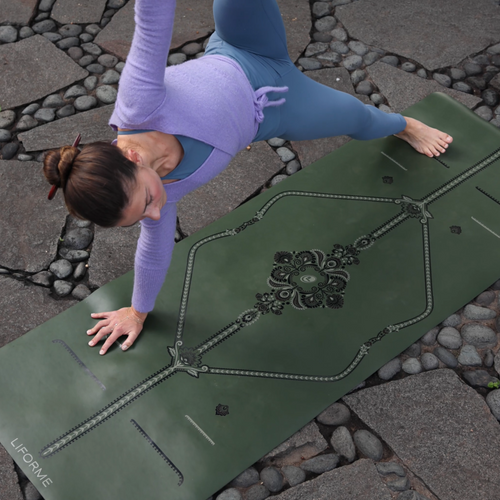
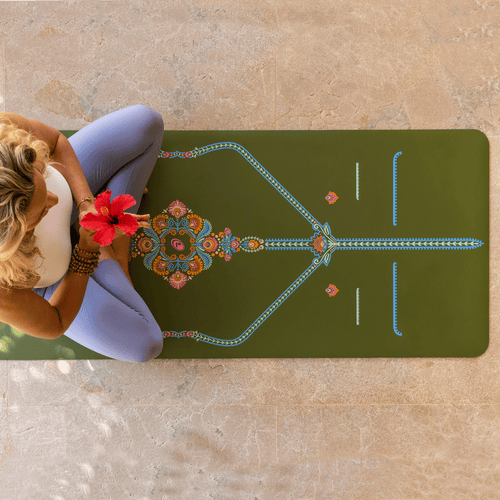
 Featured Yoga Mat: Liforme Classic Yoga Mat in Green
Eye of the Needle Pose (Sucirandhrasana)
Sanskrit Meaning: Suci (Needle) Randhra (Hole) Asana (Pose)
Yoga Level: Beginner
Pose Type: Supine
Why This Pose: Stretches your hips and glutes
Step-by-Step Instructions:
1. Lie on your back with your knees bent and pointing at the ceiling.
2. Take your left ankle to the top of your right thigh.
3. Lift your right foot off the floor.
4. Hold the back of your right thigh with both hands and hug it in.
5. Take at least five breaths, then switch sides.

Eagle Arms (Garudasana)
Sanskrit Meaning: Garuda (Eagle) Asana (Pose)
Yoga Level: Beginner
Pose Type: Seated
Why This Pose: Opens the shoulder blades
Step-by-Step Instructions:
1. Come to a comfortable seat, kneeling or cross-legged.
2. Stretch your arms forward.
3. Take your right under your left at the elbow.
4. Bend both elbows.
5. Bring your palms to touch.
6. Feel the space between your shoulder blades expand.
7. Stay here several breaths and then switch the position of your arms.
Benefits of Yoga for Tennis Players
If you’re a tennis player, adding yoga to your routine can help prevent injuries while also improving your fitness in ways that benefit your game. Here’s how:
-
Hamstring and adductor flexibility: helps with lateral movement and improves reach
-
Core stabilization and better balance: gives you more power and keeps you from falling
-
Hip and shoulder mobility: boosts your swing and keeps you healthy
-
Strengthen wrists and forearms: improves endurance and prevents related strain
-
Get out of your head: learn tools that help your mental game
Tips for Practicing Yoga as a Tennis Player
Be consistent
Yoga’s benefits come through regular practice over time. For best results, incorporate these stretches into a consistent yoga routine.
Stretch when you are warm
Static stretching is most effective when you are warm. Do some light movement before attempting deep stretches or use them as part of your cool-down.
Pay attention to your palms
In poses like Downward Dog and Plank in which your palms are bearing weight, be sure to spread your fingers and press into your fingertips. Engaging your whole hand reduces strain on the wrists.
Net Gains
Hit your yoga mat consistently, and you’ll soon see the benefits when you hit the court. In addition to improving your balance, strength, and mobility, yoga can also do wonders for your mental game. Learning to use your breath to calm your body and mind in stressful situations might be just what you need to take you to the next level.
FAQs About Yoga for Tennis Players
Is yoga good for tennis players?
Yes! When practiced consistently, yoga can improve performance, prevent injury, and help with recovery.
When should tennis players do yoga - before or after playing?
Actually, neither. Schedule your yoga separately as part of your overall fitness routine. It’s a good idea to warm up with some dynamic stretching and cool down with static stretches, however.
Which yoga poses are best for tennis players?
Practice a variety of poses to challenge your balance, improve mobility, and stretch tight areas. And you’ll never go wrong with a Downward Facing Dog.
Can yoga help prevent tennis elbow?
Strengthening and stretching your wrists and forearms with yoga can help. See a physical therapist for exercises specifically tailored to tennis elbow.
Can yoga improve my tennis game?
Yes! Cross-training with complementary exercise often improves athletic performance. Yoga may improve your strength and flexibility, not to mention your ability to handle mental stress.
How often should tennis players practice yoga?
Consistency is super important when it comes to yoga. Try for two or three times a week. Even a short session can be beneficial.
Do I need any yoga experience to get started?
Not at all! Check out our Beginner’s Guide for more info!