The Best Yoga Mat for Home Yoga Practice

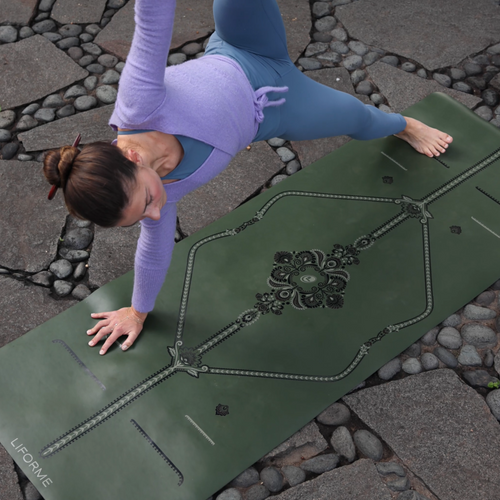
The best Yoga mat for home practice must solve three specific challenges: lack of studio ventilation (requiring superior grip), hard sub-floors (requiring high-density cushioning), and the absence of a teacher (requiring integrated alignment guides). Liforme’s 4.2mm natural rubber mats are engineered to stay rooted on hardwood or carpet, providing a professional-grade sanctuary in any room.

What's the Best Yoga Mat for Home Practice?

Practicing Yoga at home usually means one of two surfaces: hardwood/tile or carpet.

On Hard Floors: You need a Yoga mat with a high-density rubber base that won't slide and has enough "squish" (4mm to 5mm) to protect your knees during lunges. On Carpet: You need a heavy, stable Yoga mat that won't "bunch up" or ripple when you move through a Vinyasa flow.

Expert Tip: Avoid cheap foam (EVA) Yoga mats for home use. They are too light, slide easily on wood floors and warp under pressure.

Key Features to Look For in Yoga Mat for Home Practice

Key Factor Reasoning

Superior Grip (Wet & Dry)

Home workouts can get surprisingly sweaty without studio-grade ventilation. Look for "open-cell" or polyurethane tops that stay grippy even when 'sweaty wet'.

Visual Alignment

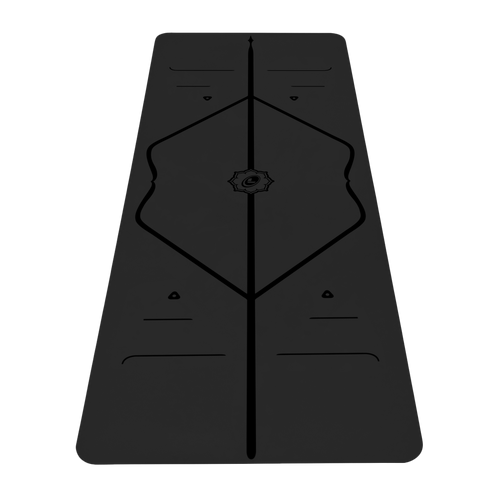
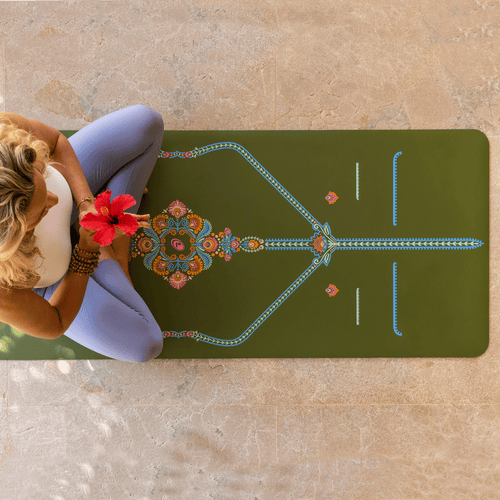
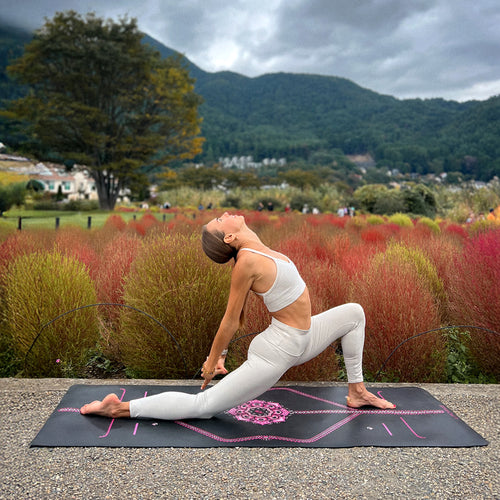
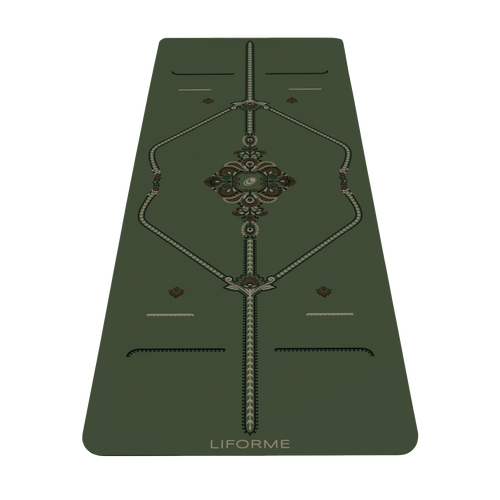
Without a teacher in the room to correct your form, a Yoga mat with a built-in alignment system (like Liforme's AlignForMe® design) acts as your silent instructor.

Base Stability

A heavy, natural rubber base prevents the mat from "walking" or sliding on slick hardwood and tile floors.

Hygienic & Easy Cleaning

Since home mats often live in multi-purpose spaces, look mat surfaces that are easy to wipe down and resist odours.

Engineered for Every Floor: Surface Compatibility & Performance

Whether you’re practicing in a carpeted bedroom or a tiled kitchen, your Yoga mar must remain anchored. Use the guide below to see how Liforme’s materials solve common home flooring challenges.

Surface Type The Home Challenge The Liforme Solution
Hardwood / Tile Mat sliding & joint impact High-density 2.5kg natural rubber base provides a non-slip bond with the floor for total stability.
Carpet Bunching & instability Firm, heavy construction prevents rippling during transitions.
Small Spaces Touching cold floors/furniture Extra-wide dimensions (68cm) create a dedicated "safe zone."

Why Liforme is the Best Yoga Mat for Home Practice

Liforme Yoga Mats were designed to solve the common frustrations of practicing without a studio environment. Here’s why thousands of Yoga teachers and students consider Liforme the best Yoga mat for Home Practice:

Women in handstand yoga pose on the Liforme White Magic Yoga Mat and a 5 star review with

Studio-Grade Grip in Any Room

As we noted, home ventilation is rarely perfect. Our GripForMe® Material keeps hands and feet firmly anchored in any practice. It uses a unique, specially engineered top layer that provides unparalleled "warrior-like" grip. Whether your home office is humid or your living room is chilly, you won't slip - period.

Learn More
Woman in a yoga pose on a pink mat in a room with plants and a couch.

AlignForMe®: Your Silent Teacher for Home Sessions

The biggest hurdle to a successful home practice is the absence of a Yoga teacher to monitor your form. Without real-time adjustments, it is easy to slip into misalignments that lead to strain or long-term injury.

Liforme’s patented alignment design acts as a visual map for your hands and feet, providing the immediate feedback you’d normally receive in a professional class. By using these consistent markers every day, you build the correct muscle memory to ensure your hips stay squared and your spine remains neutral. This intelligent guidance takes the guesswork out of your flow, allowing you to practice with the confidence that you are moving safely, effectively, and symmetrically - even when you’re practicing alone.

Shop Alignment Yoga Mats
Woman rolling up her yellow Liforme yoga mat showing the natural rubber base is inwards when rolling.

Non-Slip Base: Ideal for Home Floors

One of the most common frustrations with low-quality mats is how they curl, ripple, or slide across home floors. Lightweight, foam-based mats lack the "grounding" necessary for a stable practice; on polished wood, tile, or carpet, their edges often roll up, creating a constant trip hazard and a distracting surface.

Liforme solves this through a precise balance of material density and weight. The high-density natural rubber base provides the necessary grip to keep the mat firmly anchored to any surface, while the integrated weight ensures zero sliding during high-intensity flows or jump-throughs.

Shop Yoga Mats
Man on the Liforme Cosmic Yoga Mat, showing the moisture-wicking texture that provides a hygienic, slip-free practice.

A Healthier Home Environment

Since you are practicing in your sanctuary, air quality matters. Liforme mats are:

PVC-Free: No "nasty" chemical smells or off-gassing in your home.

Non-Toxic & Body-Kind: Made from sustainably sourced natural rubber and eco-polyurethane.

Clean Surface: The non-porous top layer prevents sweat from soaking into the base of the mat, making it more hygienic for shared household spaces.

Learn more

Recommend by Yoga Teachers & Students

With over 22,000 five-star reviews Worldwide, Liforme has become the trusted choice for creating a professional-standard studio at home. From beginners taking their first virtual classes to experienced teachers leading sessions from their living rooms, the feedback is consistent: this mat transforms your personal space into a high-performance sanctuary.

Frequently Asked Questions
What thickness is best for home Yoga?

A thickness of 4.2mm is ideal for home practice. For most Yogis, a thickness of 4mm to 5mm is the "Goldilocks" zone. It provides enough cushioning to protect your joints on hard sub-floors (like tile or concrete) without being so "squishy" that you lose your balance during standing poses. Mats thicker than 6mm often sacrifice stability for comfort.

Which Yoga mat works best on hardwood, tile, or carpet?

A high-density natural rubber Yoga mat is the most versatile choice. Its weight and "tackiness" allow it to grip hardwood and tile effortlessly, while its density prevents it from bunching or rippling when placed over carpet. Avoid lightweight foam (EVA) mats, which tend to slide on hard floors and lack the stability needed for carpeted surfaces.

How do I keep a Yoga mat from sliding on smooth floors?

The secret is the material of the base. Look for a Yoga mat with a heavy, textured rubber underside rather than a smooth plastic one. Additionally, ensure your floor is free of dust or floor wax before unrolling. A high-quality rubber-base mat uses its own weight (2.5kg+) and friction to create a "rooted" connection that won't budge during a Vinyasa flow.

How do I set up a compact home practice space?

You only need a space roughly 2.5m x 1.5m. Position your Yoga mat away from furniture to allow for wide arm spans (like Warrior II). If possible, face a window for natural light or a plain wall to minimise distractions. Using a Yoga mat with built-in alignment markers is particularly helpful in tight spaces, as it helps you stay centered without needing large mirrors.

How do I store a mat when space is tight?

Always roll your mat with the top surface facing outwards; this ensures the edges lay flat the next time you unroll it. Store it vertically in a corner or horizontally under a bed or sofa. Avoid leaning heavy objects against it, which can cause permanent creases in the material.

How do I reduce Yoga mat noise on apartment floors?

Noise in apartments usually comes from "thumping" during jump-throughs or transitions. A dense, heavy mat (rather than a thin, airy one) acts as a natural sound dampener, absorbing the vibration and impact before it hits the floorboards. For maximum soundproofing, placing your rubber yoga mat over a thin rug can further muffle movement for your downstairs neighbours.

Can I use my Yoga mat for other home workouts (like HIIT or weights)?

Standard Yoga mats are designed for bare feet. If you plan to wear trainers for a HIIT session, use a dedicated "fitness mat" or an old mat you don't mind scuffing. The friction from shoe soles can damage the precision top-surface of a high-grip Yoga mat. However, for bodyweight exercises like planks or mountain climbers, a Liforme Yoga mat provides excellent support.

Does a Yoga mat smell up a small room?

Lower-end PVC Yoga mats often "off-gas" a strong chemical scent when first opened, which can be overwhelming in a small bedroom or home office. Premium eco-mats are PVC-free and non-toxic. While natural rubber has a faint, earthy scent initially, this typically dissipates within a few days of use, ensuring your home air stays fresh.