£ GBP
£ GBP

Wild Thing (Camatkarasana) emerged out of the Anusara style of yoga around the early 2000s. Despite its recent origin, it is widely practised in contemporary yoga, along with the related Baptiste Power Yoga posture known as Flip Dog. Although there are important differences between the two poses, their names are often used interchangeably in yoga classes because the basic shapes are similar. This means that when this posture is offered, you can choose the version that works best for your body on that day.
Some yoga experts have argued that Wild Thing places the shoulders in an unstable position, which can lead to injury, while others feel that the shoulder girdle has sufficient range of motion to support a safe version of the pose.
As with any posture, your mileage will vary because every body is different. If Wild Thing or any other pose causes pain in your joints, you can choose not to practice it or adapt it in a way that makes it comfortable.
What’s the Difference Between Wild Thing and Flip Dog?
According to research by Dr Theo Wildcroft, Wild Thing Pose originated as a variation of Side Plank, specifically as a way to gracefully fall out of an attempt at Full Vasisthasana. Lifting your top leg away from the support of your bottom leg in Side Plank tends to cause the body to tip over backwards. Landing that upper leg behind you prevents a fall, and, in time, gave rise to a brand new posture.
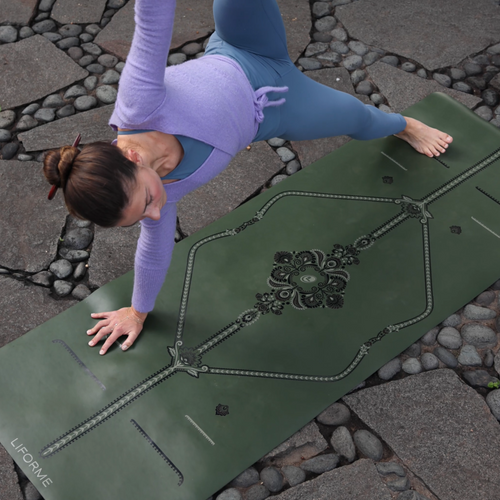
Wild Thing essentially retains the positions of the bottom leg and arm from Side Plank. The bottom leg stays straight, while the top leg is bent with the ball of that foot on the floor.
In his book 40 Days to Personal Revolution (2003), Baron Baptiste writes that his version of a Flipped Downward Facing Dog “arose very spontaneously and naturally as I developed my own style…,” perhaps in the process of playing with a very open Down Dog Split, as that is Baptiste’s point of entry to the pose.
Flip Dog is set up much more symmetrically than Wild Thing. The feet are flat on the floor and parallel to each other, and both knees are kept bent, making the alignment similar to Wheel Pose in the lower body.

Step-by-Step Instructions for Wild Thing
- Begin in a Side Plank (Vasisthasana) with your left hand on the floor.
- Lift your right leg to hover above your left leg any amount.
- Place the ball of the right foot on the floor behind you with the right knee bent.
- If you have been on the knife-edge of your left foot, you can release more of your sole to the floor while maintaining at least a 45-degree turnout and keeping the left leg straight.
- Press into both feet to lift your hips and rotate them both to face toward the ceiling. The right hip will naturally stay a bit higher than the left, due to the position of your legs.
- Press into your left palm and open your chest toward the ceiling.
- Reach the right arm straight up or sweep it overhead towards the front of the mat.
- Release your head.
- To exit, pivot on the ball of your left foot as you lift the right leg back to the right side of your mat.
- As your hips and chest turn to face the floor, drop your right hand next to your left hand to come into a Plank position. Alternatively, you can just lower your seat to the floor.
🧘 Tip from a Yogi
The heart-opening in both Wild Thing and Flip Dog comes from lifting your hips toward the ceiling, which, in turn, comes from pressing strongly into your feet. If your seat is lingering close to the floor, try creating some lift from the oppositional energy between your feet and the floor.
Camatkarasana Basics
Sanskrit Meaning: Camatkara (Wonder/Astonishment) Asana (Pose)
Yoga Level: Intermediate
Pose Type: Backbend
Pose Category: Heart Opener
Wild Thing Benefits
- Opens the chest and shoulders
- Stretches the side body, including the intercostal muscles between the ribs
- Builds core strength and balance
Wild Thing Yoga Pose Key Alignment Cues
-
Bottom Leg Stays Straight
Keep the supporting leg long with a 45-degree turnout. -
Don’t Plant the Heel
Land only the ball of the top foot with the knee bent. -
Lift from the Legs
Drive the hips up through both feet to lift your hips and open your heart.

Step-by-Step Instructions for Flip Dog
- From Downward Facing Dog, lift your right leg to an open-hipped Down Dog Split position.
- Bend your right knee, drawing the heel towards the outer right hip.
- Keep opening your hip wider until you flip over. As your body turns, lift your right hand, pivot on the ball of your left foot to bring the left heel down, and land your right foot parallel to the left.
- Keeping both knees bent, press down into both feet and your left hand to lift your hips and chest up toward the ceiling.
- Reach your right arm up to the sky or toward the front of your mat.
- Release your head.
- To come out, reverse your course by turning your chest back toward the ground, bringing your right hand down parallel to your left as you lift your right foot, flip your hips to face the floor, and return to a Downward Dog.
Flip Dog Benefits
- Heart-opening chest expansion
- Stretches the side body
- Improves core strength and overall stability
Flip Dog Key Alignment Cues
-
Feet Parallel, Knees Bent
Keep both feet flat and parallel with both knees softly bent. -
Plant the Foot
Set both heels down for a grounded lift. -
Drive Hips from the Legs
Press through both feet and glutes to lift the hips.
Why We Practice Camatkarasana and Flip Dog
Both these yoga poses have their origins in experimentation and play, things that often go missing when we take our practices too seriously. We practice these poses to remind ourselves to keep it light, play with form, and get close enough to the edges that we might fall out. Though we’ve highlighted the differences between these poses, there’s enough overlap and freedom for you to discover your own unique way to flip your Dog.
Wild Thing Yoga Pose & Flip Dog FAQs
What’s the difference between Wild Thing Yoga Pose and Flip Dog?
Wild Thing keeps the bottom leg straight and lands only the ball of the top foot behind you. Flip Dog plants both feet flat and parallel with both knees bent, giving a more Wheel-like base.
Are these poses safe for my shoulders?
Yes, provided you root the hand evenly, lift from your legs and glutes, and keep space across the collarbones. If anything feels sharp or pinchy, ease out or switch to the other pose.
What alignment cues should I focus on?
For Wild Thing, keep the bottom leg straight, place the ball of the top foot down, and lift the hips from the legs.
For Flip Dog, keep both feet flat and parallel, both knees bent, and drive the lift through both feet.
How long should I hold the pose?
Begin with 3–5 slow breaths. Stay longer only if your breath remains easy and the shape feels steady.
Where should I feel the work?
Primarily in the legs and glutes as they lift the hips, with a broad, open chest and shoulders that feel integrated, not compressed.
What’s the safest way to exit?
Reverse your entry: re-plant the lifted hand, square the chest and hips to the floor, and return to Plank or Downward Facing Dog with control.