£ GBP
£ GBP

Camel is one of our favourite backbends because it activates so many parts of the body and is also super adaptable. It’s an amazing stretch for the whole front body while also working both the front and back of the core.
It offers a nice alternative to Wheel Pose (Urdhva Dhanurasana) for people with sensitive shoulders and wrists. There are lots of ways to customise Camel so that it works for you, including using props for more support. Poses that grow with you and fit the needs of your practice are what asana exploration is all about.
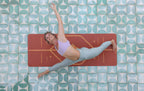
 Featured Yoga Mat: Cosmic Moon in Dusk Blue
Step-by-Step Instructions for Camel Pose
- Come to a kneeling position with your pelvis stacked over your knees and your thighs parallel. Take a Yoga Pad under your knees for extra comfort.
- The tops of your feet can be flat to the mat, or you can curl your toes under and come to the balls of your feet. Tucking the toes raises the heels a bit, making them easier to reach.
- Press down into your feet and knees.
- Shrug your shoulders up to your ears, and then release them down your back as you hug your shoulder blades together towards your spine to open your heart.
- Place your hands on your hips or take your palms to your sacrum with your fingers pointing down.
- On an inhalation, arch your back to lift your chest toward the ceiling and take the crown of your head towards the back of the room.
- Keep some tone in your neck so it supports the head at shoulder level. Let your chin point toward the ceiling or tuck it if that's more comfortable.
- Reach your hands back to your heels one at a time. If your hands don’t reach the heels with your toes tucked under, a block on either side of your knees (at any level) is a good alternative. You can also keep your hands on your sacrum or low back.
- Use the connection to your heels or blocks to continue drawing your shoulder blades toward the spine.
- Engage your buttocks to press your thighs forward so that your pelvis stays over your knees.
- Hold for several breaths and then release your hands and lower your seat to your heels. Repeat the posture twice more if you like, maybe trying on a Half Camel.
Ustrasana Basics
Sanskrit Meaning: Ustra (Camel) Asana (Pose)
Yoga Level: Intermediate
Pose Type: Kneeling
Pose Category: Backbend
Common Props: Yoga pad, Blocks
Benefits of Camel Pose
- Spinal extension
- Improves core strength
- Stretches the quadriceps
- Stretches the psoas
- Opens the chest
- Opens the throat
Camel Pose Variations
 Featured Yoga Mat: Liforme Classic Yoga Mat in Grey
Half Camel Variation
Take your right hand to your right heel. Lift your left hand toward the ceiling.
Stay here or continue rotating the shoulder so that your hand points toward the back of the room.
Preparatory Poses

Sphinx Pose (Salamba Bhujangasana)
Introduces gentle backbending and heart-opening.
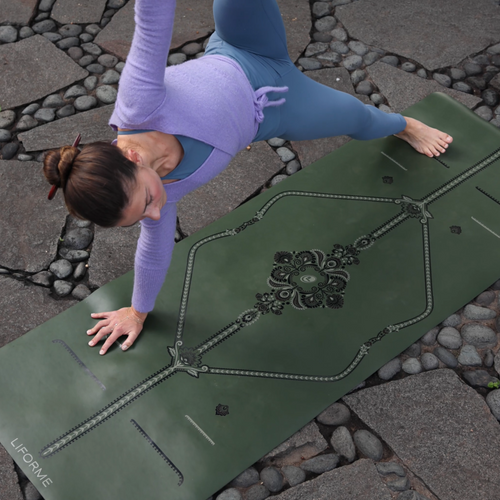
 Featured Yoga Mat: Liforme Classic Yoga Mat in Purple
Bridge Pose (Setu Bandhasana)
Warm up for spinal extension in a more supported position.
Counter Poses
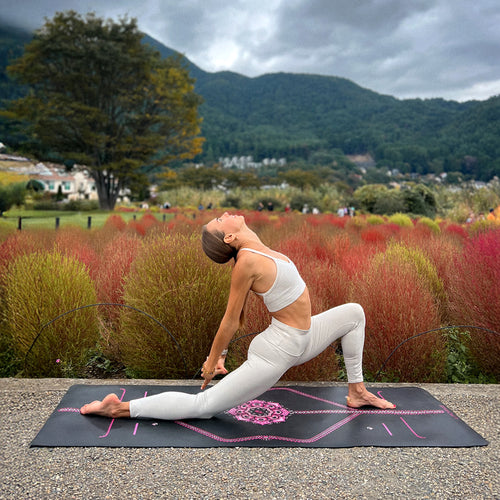
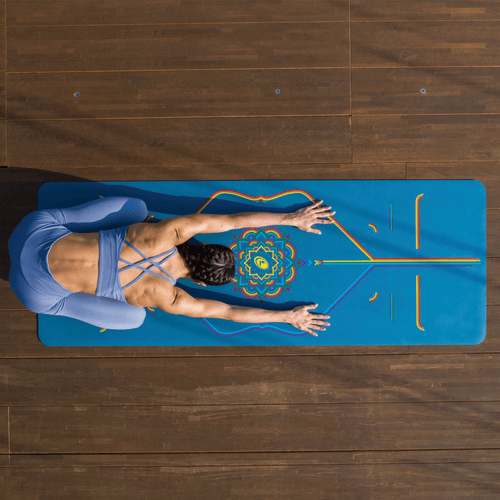
 Featured Yoga Mat: Rainbow Yoga Mat in Blue Sky
Child's Pose (Balasana)
Rounds the spine in the opposite direction and releases the lower back.

Downward Facing Dog (Adho Mukha Svanasana)
Lengthens the spine and decompresses after the backbend.
Why We Practice Camel Pose
When it’s time for backbending, we often fall back on the old familiars like Bridge and Wheel. Camel takes your spinal extension into a different plane, keeping things fresh and challenging. It also doesn’t tax the wrists and shoulders in the same way that Wheel does, so you have the opportunity to focus more on opening your chest and accessing the upper spine while also working your core and glutes.
Camel Pose FAQs
Is Camel Pose suitable for beginners?
Camel Pose is generally considered intermediate because it requires some spinal mobility and core engagement. Beginners can work toward it by keeping their hands on the sacrum rather than reaching for the heels, or by using blocks at either side.
Why does Camel Pose hurt my lower back?
Lower back discomfort usually comes from the lumbar spine taking the brunt of the backbend rather than the thoracic spine. Focus on lifting your chest and drawing your shoulder blades in before arching, and keep your glutes engaged to press the thighs forward.
What are good counter-poses after Camel Pose?
Child's Pose is the most common counter-pose, as it rounds the spine gently in the opposite direction and releases the lower back. A gentle seated forward fold also works well.
What is the difference between Camel Pose and Wheel Pose?
Both are deep backbends, but Camel Pose is performed from kneeling and doesn't load the wrists or shoulders in the same way. Wheel Pose (Urdhva Dhanurasana) requires significant shoulder and wrist mobility, making Camel a useful alternative for those with wrist sensitivity.