£ GBP
£ GBP

If you do yoga regularly, you undoubtedly know many foundational yoga poses that engage and strengthen your whole body. Indeed, it’s easy to get into the habit of doing the same reliable, tried and true poses again and again, and there’s absolutely nothing wrong with that approach. In fact, many styles of yoga are based on consistent repetition of a set sequence of poses, and that suits a lot of people.
But there are times when it’s fun to change things up a little by incorporating new poses into your flow. If your yoga routine needs some spice, try switching these common poses for our under-the-radar recs.
The 11 Best Poses to Spice up Your Routine
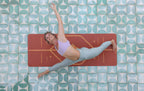
 Featured Yoga Mat: Liforme Classic Yoga Mat in Purple
Puppy Pose (Uttana Shishosana)
Instead of: Child’s Pose (Balasana)
Sanskrit Meaning: Uttana (Intense) Shisho (Puppy) Asana (Pose)
Yoga Level: Beginner
Pose Type: Kneeling
Why This Pose: Coming up onto your knees in Puppy changes the angle of your back, bringing the spine more into extension than flexion (as in Child’s Pose). It’s nice to bring some variation into your resting posture.
Step-by-Step Instructions:
- Come to a hands-and-knees position.
- Keeping your butt over your heels, walk your hands forward until your forehead or chin comes to the mat.
 Featured Yoga Mat: Liforme Classic Yoga Mat in Deep Forest Green
Upward Plank Pose (Purvottanasana)
Instead of: Plank Pose
Sanskrit Meaning: Purva (Front) Uttana (Intense Stretch) Asana (Pose)
Yoga Level: Intermediate
Pose Type: Arm Support
Why This Pose: Try flipping your Plank to work your arms and core in different ways.
Step-by-Step Instructions:
- Sit in Staff Pose with your legs straight and your palms flat on your mat on either side of your hips.
- Press into your hands and lift your butt off the floor, keeping your legs straight.
- Continue to use your glutes to lift your pelvis toward the ceiling, possibly bringing the balls of your feet to the mat.
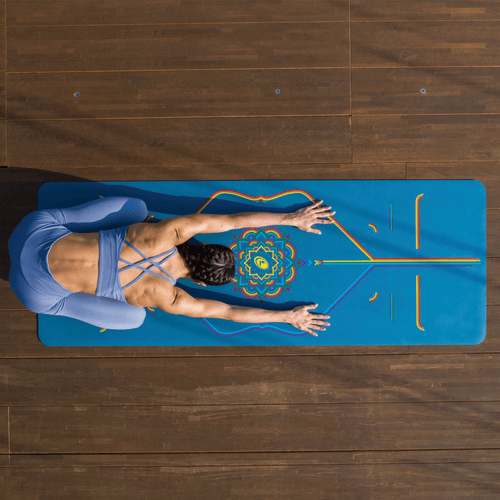
 Featured Yoga Mat: Liforme Classic Yoga Mat in Blue
Wild Thing Pose (Camatkarasana)
Instead of: Side Plank Pose (Vasisthasana)
Sanskrit Meaning: Camatkara (Wonder) Asana (Pose)
Yoga Level: Intermediate
Pose Type: Arm Support
Why This Pose: Wild Thing arose as a variation on Side Plank, so it’s a natural extension and alternative.
Step-by-Step Instructions:
- From Side Plank, lift your upper leg away from the lower one any amount.
- Bend the knee of the upper leg and allow the toes to touch down onto the mat behind your lower leg.
- Keeping your lower leg straight, turn your pelvis and chest toward the ceiling.
- Drop your lifted arm over your head.

Lizard Pose (Utthan Pristhasana)
Instead of: Low Lunge Pose
Sanskrit Meaning: Utthan (Intense) Pristha (Back) Asana (Pose)
Yoga Level: Intermediate
Pose Type: Standing
Why This Pose: Take your Low Lunge a little wider and deeper, and you have Lizard Pose.
Step-by-Step Instructions:
- From Downward Facing Dog, step your right foot to the outside of your right hand.
- Lower your elbows and forearms to your mat.
- Lower your left knee if necessary.

Side Lunge Pose (Skandasana)
Instead of: Wide-Legged Standing Forward Bend (Prasarita Padottanasana)
Sanskrit Meaning: Skanda (A war god) Asana (Pose)
Yoga Level: Intermediate
Pose Type: Standing
Why This Pose: Taking your wide-legged forward fold into a side lunge to each side offers a balance challenge and an opportunity to stretch deeper into the adductor muscles of the inner thighs.
Step-by-Step Instructions:
- From Prasarita Padottanasana, bend your right knee and lower your butt toward the floor.
- Flex your left foot and point your left toes toward the ceiling.
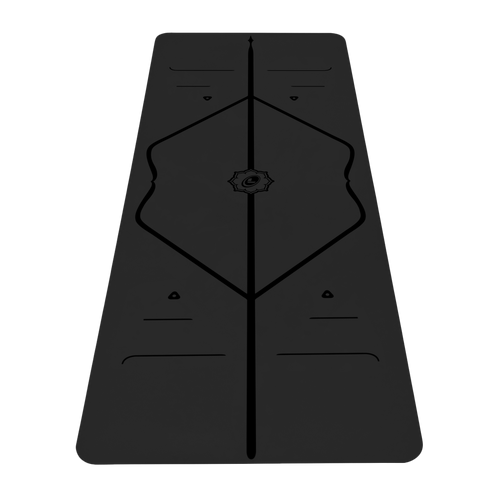
 Featured Yoga Mat: Black & Gold Yoga Mat
Humble Warrior Pose
Instead of: Warrior I (Virabhadrasana I)
Yoga Level: Intermediate
Pose Type: Standing
Why This Pose: Keeping your legs in Warrior I while forward folding your upper body brings balance and alignment to the fore.
Step-by-Step Instructions:
- From Warrior I, interlace your hands behind your back.
- Keeping your legs in the same position, forward fold toward the front of your mat.
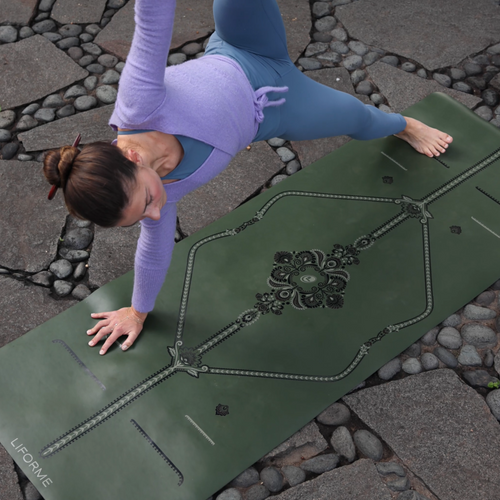
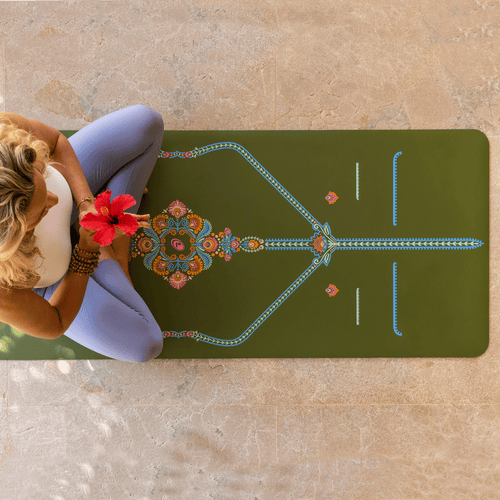
 Featured Yoga Mat: Paisley Passion in Olive
Dolphin Pose (Ardha Pincha Mayurasana)
Instead of: Downward Facing Dog (Adho Mukha Svanasana)
Sanskrit Meaning: Ardha (Half) Pincha (Feathered) Mayur (Peacock) Asana (Pose)
Yoga Level: Intermediate
Pose Type: Arm Support
Why This Pose: We do so many Down Dogs that it’s nice to change things up, give your wrists a break, and work toward Forearm Stand.
Step-by-Step Instructions:
- From Downward Facing Dog, lower your elbows and forearms to your mat.
- Keep your forearms parallel and press into the palms of your hands.
 Featured Yoga Mat: Cosmic Moon in Black
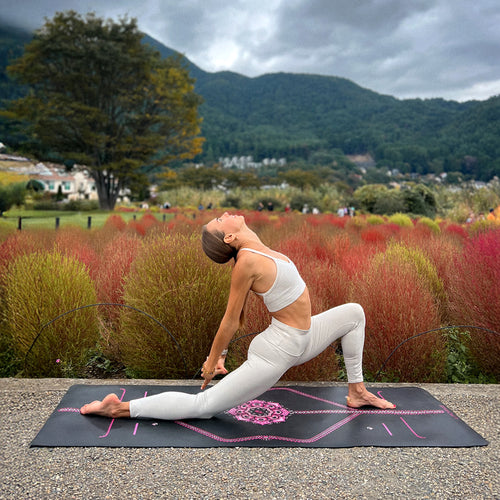
Camel Pose (Ustrasana)
Instead of: Wheel Pose (Urdhva Dhanurasana)
Sanskrit Meaning: Ustra (Camel) Asana (Pose)
Yoga Level: Intermediate
Pose Type: Backbend
Why This Pose: Camel is a wonderful way to get a deep backbend that is easier on your shoulders than Wheel Pose.
Step-by-Step Instructions:
- Come to a kneeling position with your pelvis stacked over your knees, using a Yoga Pad for support, if needed.
- Tuck your toes under to lift your heels.
- Keeping your pelvis over your knees, puff up your chest to bring your spine into extension.
- Place your hands on your sacrum, then onto your heels if accessible.
 Featured Yoga Mat: Liforme Classic Yoga Mat in Pink
Firefly Pose (Tittibhasana)
Instead of: Crow Pose (Kakasana)
Sanskrit Meaning: Tittibha (Firefly) Asana (Pose)
Yoga Level: Advanced
Pose Type: Arm Balance
Why This Pose: Once you are comfortable in Crow, a whole world of other arm balances opens up.
Step-by-Step Instructions:
- Start in a Forward Fold (Uttanasana) with your feet slightly wide.
- Bend your knees and place your palms flat on your mat just behind your heels.
- Lower your butt and press into your palms until your feet lift from the floor.
- Activate your toes, and straighten your legs and arms as much as possible.

Seated Easy Twist Pose (Parivrtta Sukasana)
Instead of: Half Lord of the Fishes Pose (Ardha Matsyendrasana)
Sanskrit Meaning: Parivrtta (Revolved) Sukha (Easy) Asana (Pose)
Yoga Level: Beginner
Pose Type: Seated
Why This Pose: Focus on revolving your spine with both buttocks firmly on the floor.
Step-by-Step Instructions:
- Sit in Easy Pose with your hands on your knees.
- Bring your right hand behind you and your left hand to the outside of your right knee as you twist to the right.

Cow Face Pose (Gomukhasana)
Instead of: Eagle Pose (Garudasana)
Sanskrit Meaning: Go (Cow) Mukha (Face) Asana (Pose)
Yoga Level: Beginner
Pose Type: Seated
Why This Pose: An alternative way to get into your glutes without worrying about balance.
Step-by-Step Instructions:
- Begin in Easy Pose.
- Bring each foot to the outside of your opposite hip and stack your knees at the Central Line of your mat, with the right knee on top.
- Lift your right arm straight up toward the ceiling, then bend at the elbow and drop your right hand to the center of your back.
- Take your left arm out to the left side, then bend at the elbow and reach up your back so your hands meet. If they don’t meet, use a strap or a shirt to make the connection.
Tips to Spice Up Your Yoga Routine
- Try one new pose per session rather than overhauling your whole flow. Small swaps are easier to integrate and less likely to disrupt your rhythm.
- Explore poses from a different yoga style. If you mostly practice Vinyasa, a Yin or Iyengar-influenced shape can open up new sensations in familiar areas.
- Take a class outside your usual style or teacher. You'll almost always leave with at least one pose you hadn't tried before.
- Keep a short list of poses you want to explore. Even two or three waiting in the wings means you're never stuck defaulting to the same sequence.
Variety Is the Spice
Including a variety of yoga poses in your practice keeps your body guessing and your mind engaged. Yoga is a whole-body practice, which means that it offers myriad ways to stretch and strengthen every part of you.
If you ever feel stuck in a rut, try these alternatives to some of your usual poses, and you may find yourself with a few new favorites before long.
FAQs
Can doing the same yoga poses every session limit your progress?
Repeating the same poses builds consistency and depth, but over time, your body adapts, and the challenge diminishes. Introducing new shapes keeps the muscles working in different ranges and stops your practice from plateauing.
What are the benefits of adding variety to your yoga routine?
Mixing up your poses means you're more likely to work the full range of muscles, joints, and movement patterns that yoga has to offer. It can also sharpen your focus; unfamiliar poses demand more attention than ones you could do in your sleep.
How often should I change up my yoga routine?
There's no fixed rule, but swapping one or two poses per session is enough to keep things interesting without losing the continuity that makes a regular practice valuable.
Will trying new poses affect the flow of my practice?
It can take a little adjustment, but most alternatives slot naturally into the same part of a sequence as the pose they're replacing. Starting with one swap at a time makes the transition easier.